

Here’s a polished, news portal-style feature article expanded to around 600 words.
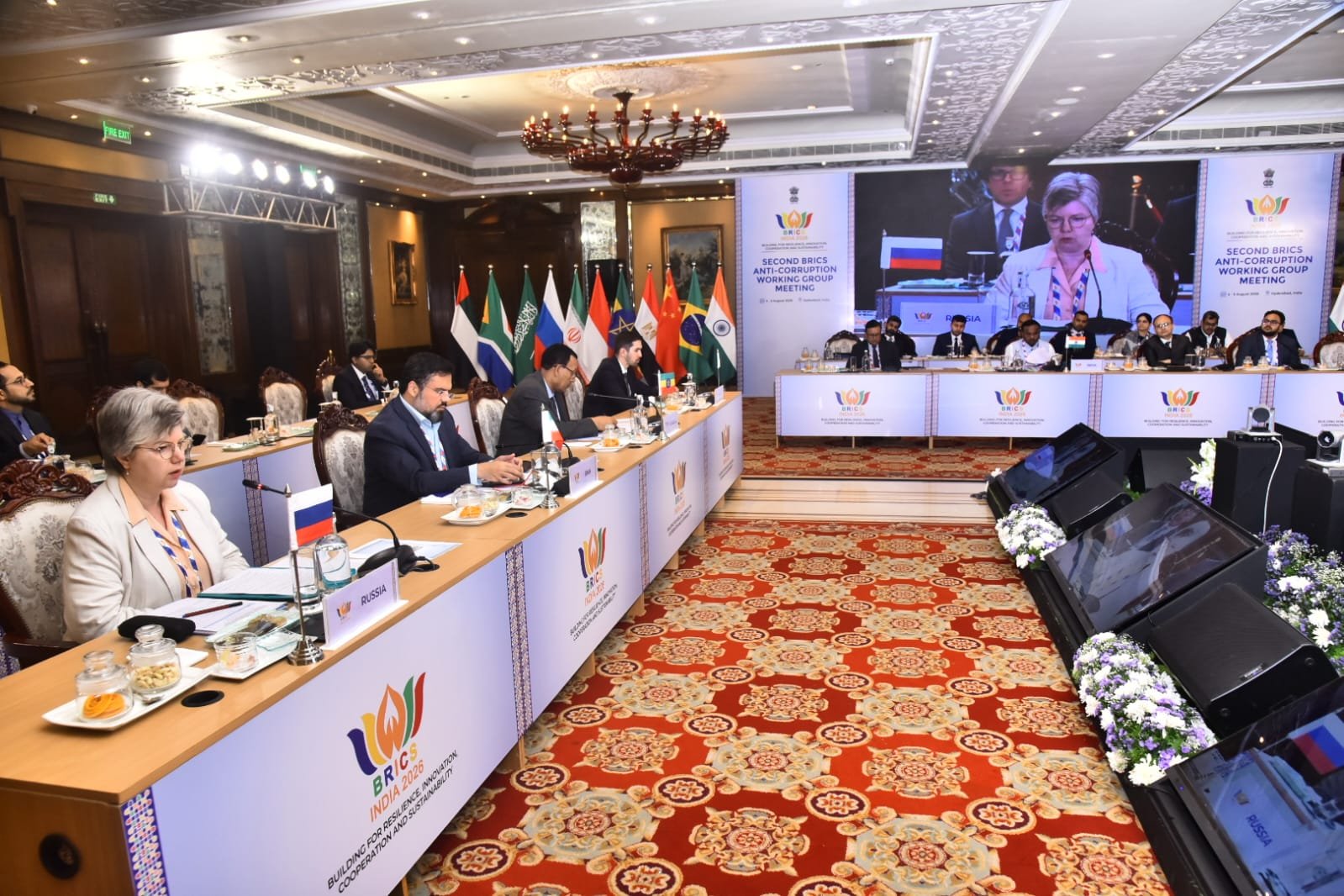
Hyderabad: India’s BRICS Presidency 2026 marked a significant milestone in advancing global efforts against corruption as the Second Meeting of the BRICS Anti-Corruption Working Group and the Second Meeting of the BRICS Expert Network on Asset Recovery concluded successfully in Hyderabad. The high-level deliberations resulted in important understandings among BRICS member nations to strengthen cooperation in combating cross-border corruption, tracing fugitive offenders, recovering illicit assets and promoting transparent, technology-driven governance.
Hosted by the Department of Personnel and Training (DoPT), Government of India, the two-day meetings brought together senior policymakers, anti-corruption experts, financial intelligence officials and law-enforcement representatives from all BRICS member countries. The discussions were held under India’s BRICS Presidency theme, “Building for Resilience, Innovation, Cooperation and Sustainability,” reflecting the group’s commitment to addressing emerging global governance challenges through collaborative action.
Inaugurating the meetings, Rachna Shah, Secretary, Department of Personnel and Training, reiterated India’s unwavering zero-tolerance policy towards corruption. She emphasised that integrity, transparency, accountability and technology-enabled governance are fundamental pillars of effective public administration and sustainable economic development.
She underlined the growing need for stronger international partnerships in tackling sophisticated financial crimes, stressing that timely information sharing, closer engagement among enforcement agencies and coordinated cross-border investigations are essential in today’s interconnected world.
One of the most significant outcomes of the Hyderabad meetings was the substantial progress achieved on India’s proposal to establish a BRICS Network of Law-Enforcement Practitioners. The proposed platform aims to strengthen operational cooperation among investigators involved in tracing fugitive economic offenders, sharing intelligence and supporting extradition processes.

Member countries reached an in-principle agreement on the initiative and decided to continue consultations on developing a dedicated practitioner-level mechanism that would enable faster coordination between law-enforcement agencies across BRICS nations.
Another important achievement was the unanimous support for the creation of a BRICS Repository on Informal Cooperation. The repository will function as a practical knowledge-sharing platform documenting national experiences, best practices and informal cooperation mechanisms used in locating fugitive offenders and facilitating international collaboration during complex corruption investigations.
The BRICS Expert Network on Asset Recovery also registered notable progress by reaching consensus on standardised formats for practitioner-level information exchange during investigations. Delegates endorsed the creation of a Directory of Focal Points and Experts, which will facilitate direct communication among competent authorities responsible for asset tracing, seizure and recovery across BRICS member countries.
Representatives from member nations shared valuable national experiences and successful case studies in recovering proceeds of corruption and other financial crimes. The discussions highlighted the importance of strengthening institutional cooperation, enhancing investigative capabilities and improving coordination between anti-corruption agencies, financial intelligence units and prosecuting authorities.
Recognising the rapidly evolving nature of corruption, the meetings also focused extensively on the role of technology in promoting ethical governance.
A dedicated thematic session titled “Ethical Governance through Innovation and Tech-Driven Systems” showcased how digital governance, artificial intelligence (AI), machine learning and big-data analytics are transforming public administration. Experts highlighted that advanced digital tools can significantly improve transparency, detect irregularities at an early stage, reduce discretionary decision-making and strengthen public accountability.
Participants further emphasised the importance of open-data initiatives, digital social audit mechanisms and citizen-centric grievance redressal systems in building public trust and improving governance outcomes.
Another major area of discussion was the growing challenge posed by Financial Technology (FinTech) and Virtual Digital Assets (VDAs). While acknowledging their transformative potential for financial inclusion and innovation, delegates also recognised that these emerging technologies can be misused to conceal illicit wealth and launder proceeds generated through corruption.
Member countries therefore stressed the need for risk-based regulatory frameworks, stronger anti-money laundering safeguards, enhanced oversight of digital financial ecosystems and deeper cooperation among Financial Intelligence Units to effectively monitor cross-border financial transactions.
The Hyderabad meetings concluded with a strong reaffirmation of the collective commitment of BRICS nations to intensify practical cooperation in combating corruption, recovering illicit assets, tracing fugitive offenders and strengthening transparent, accountable and technology-driven governance.
The outcomes achieved during India’s BRICS Presidency are expected to provide a robust foundation for future BRICS Presidencies, paving the way for stronger operational collaboration among anti-corruption institutions and law-enforcement agencies while reinforcing the bloc’s shared resolve to combat corruption through innovation, international cooperation and institutional resilience.