

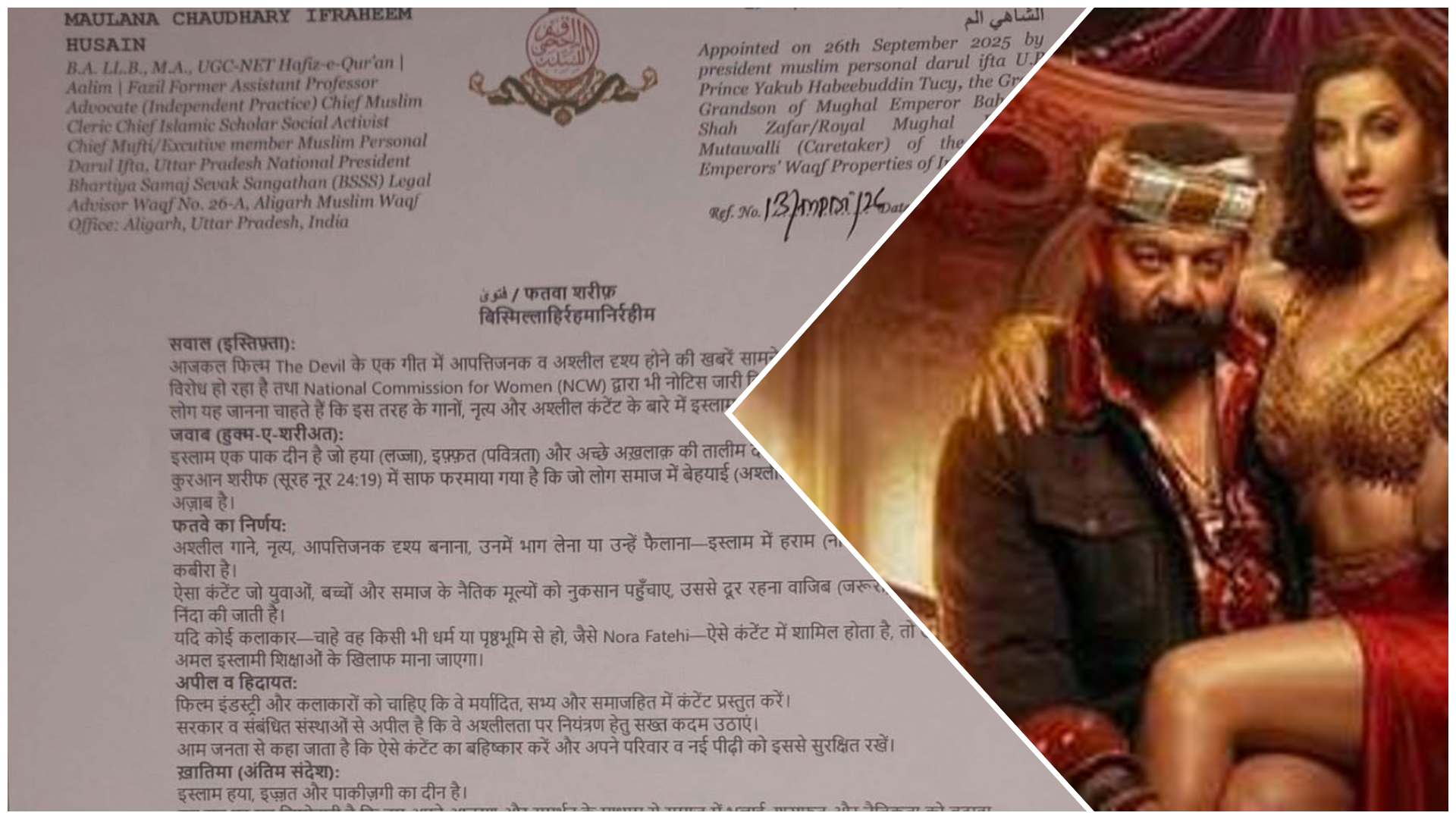
Hyderabad: A fresh controversy has emerged in the entertainment industry after a fatwa was issued against actor-dancer Nora Fatehi over her performance in the song ‘Sarke Chunar Teri Sarke’. The directive, issued by the Muslim Personal Darul Ifta, has triggered widespread debate on the intersection of artistic expression and religious values.
Prince Yakub Habibuddin Tucy, President of the Muslim Personal Darul Ifta and a self-identified descendant of the Mughal royal family, released an official clarification on March 23, 2026, addressing the issue. According to his statement, the fatwa was formally issued by Maulana Chaudhary Ifraheem Husain, who has been designated as the Shahi Chief Mufti of Uttar Pradesh.
Tucy emphasized that Maulana Husain is the only Shahi Chief Mufti currently appointed by the Mughal royal lineage and also serves as the Chief Mufti of the Darul Ifta. As such, he asserted that any fatwa issued by him is legitimate, authorized, and in accordance with Islamic principles.
The statement further clarified that the fatwa is rooted in religious teachings that discourage obscenity, immodesty, and content perceived as morally harmful. It stressed that the intent is not to target any individual personally but to provide guidance aligned with ethical and social values. “The fatwa should be understood as advisory in nature and not as a form of personal hostility,” the statement noted.

The development has come in response to the song ‘Sarke Chunar Teri Sarke’, featuring Nora Fatehi, which has drawn criticism from certain quarters for its choreography and visual presentation. While the song has gained popularity among audiences, it has also reignited longstanding debates around the portrayal of women in entertainment and the boundaries of creative freedom.
In his address, Prince Tucy also warned against the misuse of the term “fatwa,” stating that some individuals are issuing statements without proper authority, thereby creating confusion and controversy. He urged the public to recognize that only directives issued by a duly appointed Shahi Mufti should be considered valid.
“Any statements made in the name of a fatwa by unauthorized persons are misleading and should not be taken seriously,” he said, calling for responsible reporting and public discourse.
The Darul Ifta’s press office appealed to media organizations and the general public to approach the matter with sensitivity and avoid sensationalism. It urged people to understand the issue within its proper religious and ethical context, emphasizing the importance of maintaining communal harmony.
“Islam stands for compassion, dignity, and justice. Any guidance issued by the Shahi Mufti is aimed at promoting moral values and the well-being of society,” the statement concluded.
The controversy has sparked mixed reactions on social media and within the film fraternity. While some have defended artistic freedom and questioned the relevance of such directives in modern times, others have supported the right of religious bodies to express their views on cultural matters.
As the debate continues, the incident highlights the ongoing tension between evolving entertainment standards and traditional belief systems in a diverse society.