

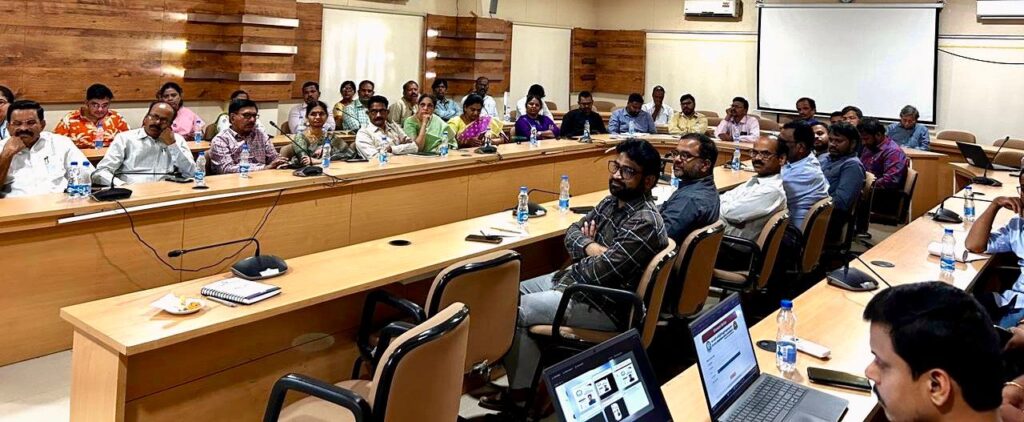
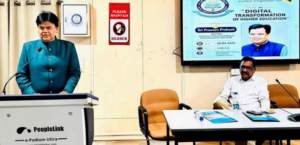
Hyderabad: Dr. B. R. Ambedkar Open University hosted a thought-provoking lecture-cum-interaction programme on “Digital Transformation of Higher Education” on Wednesday, highlighting the urgent need for universities to adopt advanced technologies and reimagine learning systems for the future. The event brought together academicians, administrators, faculty members, researchers, and education stakeholders for a detailed discussion on how technology can reshape higher education institutions.
The keynote address was delivered by Praveen Prakash, who underlined that universities must modernize rapidly to remain globally competitive and academically relevant in the digital age.
Speaking at the seminar, he said higher education institutions can no longer rely solely on conventional classroom-based teaching models. Instead, they must integrate technology into every aspect of academic functioning, including curriculum delivery, student services, research, assessments, and institutional governance. He observed that digital transformation is not merely about using computers or software, but about fundamentally redesigning the educational ecosystem to improve access, quality, flexibility, and efficiency.
Praveen Prakash highlighted the role of SWAYAM, the flagship digital learning initiative launched by the Ministry of Education, Government of India, to facilitate credit-based online courses for students across the country. He said platforms like SWAYAM have democratized access to quality education by allowing learners from diverse backgrounds to study from leading institutions without geographical limitations.
He further noted that universities today are independently offering fully online degree programmes, a trend that has accelerated in recent years due to advancements in digital infrastructure and changing student expectations. According to him, flexible learning models are becoming increasingly important for working professionals, rural learners, women, and those who require accessible education opportunities.
The retired IAS officer also emphasized the importance of robust Learning Management Systems (LMS) that comply with the norms of the University Grants Commission. Such platforms, he said, help universities deliver lectures, assessments, assignments, discussion forums, attendance management, and performance tracking in an integrated and transparent manner.
Addressing the gathering, Vice Chancellor Prof. Ghanta Chakrapani said digital transformation should not be confined to the classroom alone. It must extend to academic administration, institutional operations, governance systems, student engagement, examination processes, and long-term development planning.
He stressed that universities must continuously evolve with the changing times and proactively adopt strategic reforms driven by innovation. According to him, institutions that embrace digital tools can create more inclusive, student-friendly, and efficient campuses capable of meeting future educational demands.
Prof. Chakrapani also pointed out that the use of digital technology can improve learning outcomes through personalized education, data-driven decision-making, and interactive teaching methodologies. He said technology can help bridge the gap between urban and rural learners while enabling universities to expand their reach beyond physical campuses.
The programme was presided over by Academic Director Prof. G. Pushpa Chakrapani. Senior faculty members including professors, deans, heads of departments, teaching and non-teaching staff, research scholars, and employee union representatives attended the event.
The seminar reflected the university’s commitment to staying at the forefront of educational innovation and promoting meaningful dialogue on the future of higher education in India. As digital disruption continues to transform every sector, experts at the event agreed that universities must act decisively to build agile, technology-enabled institutions prepared for the challenges and opportunities of tomorrow.