

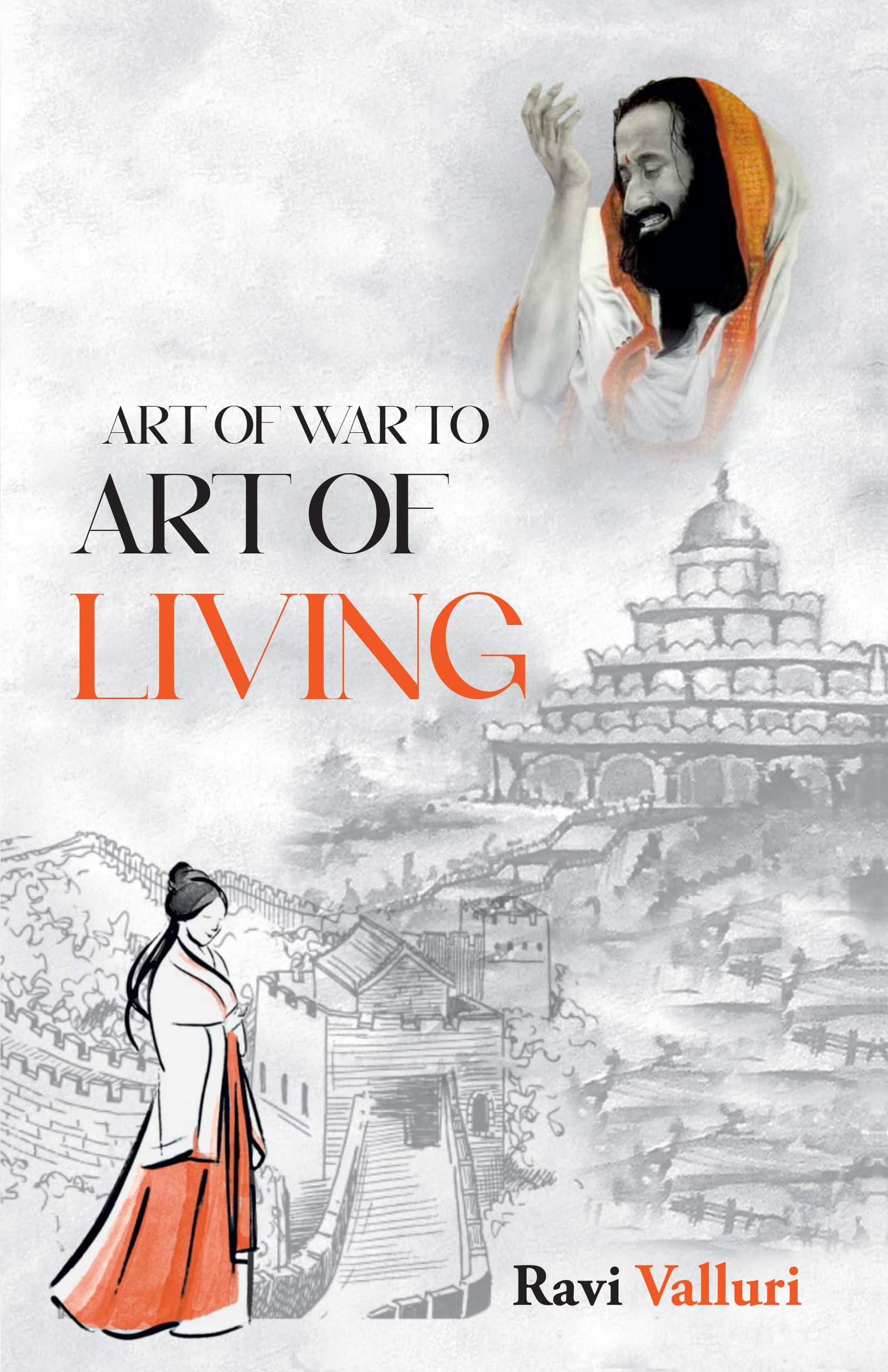
What happens when a person who has spent years pursuing success, security and happiness discovers that the very things she was chasing may not hold the key to a fulfilling life?
Ravi Valluri’s Art of War to Art of Living explores this compelling question through the journey of a Chinese technology professional who rises from a humble background, builds a life of promise, loses almost everything she has created back home and eventually travels westwards to India—much like the legendary Chinese monk Xuanzang, who journeyed to India nearly 1,400 years ago in search of knowledge and spiritual wisdom.
But this is not merely a story about geographical travel. It is an inward journey—from ambition to introspection, from material achievement to meaning, and ultimately from the “art of war” to the “art of living”.
At the heart of the book lies a deceptively simple question: What really makes us happy?
The “Quest of Happiness” section, an excerpt from the book, offers a particularly insightful window into Valluri’s approach. Through the character Xiao Ming, the author examines the uncertainties and emotional contradictions that accompany modern life. Despite having people, relationships and material comforts around us, there can remain an inexplicable sense of emptiness.
The book captures a familiar human tendency: postponing happiness.
We tell ourselves that we will be happy when we get the desired job, achieve financial security, find the right relationship, buy a house, reach a particular position or overcome a particular difficulty. Happiness becomes a destination rather than an experience.
Valluri challenges this mindset with a powerful proposition: happiness should not continually be deferred to some imagined future date.
The idea is especially relevant in an age in which professional ambition, social comparison and digital distractions constantly encourage people to measure their worth through external achievements. The book asks readers to pause and examine whether the endless pursuit of “more” is actually bringing them closer to happiness.
What makes Art of War to Art of Living interesting is the contrast between its protagonist’s outward journey and her inner transformation. The Chinese connection also gives the narrative a distinctive civilisational dimension. The reference to Xuanzang is more than a historical parallel. His journey represents the ancient quest for wisdom, while Xiao Ming’s journey reflects a contemporary search for emotional and spiritual clarity.
In that sense, India becomes more than a destination in the narrative. It becomes a space for discovery.
Valluri’s storytelling appears particularly effective when he moves away from abstract spiritual discourse and presents philosophical ideas through lived experiences. The reader is not simply told what happiness, mindfulness or inner peace mean; instead, these ideas emerge through the protagonist’s questions, disappointments and discoveries.
The “Quest of Happiness” passage is a good example. It acknowledges that life inevitably contains “misadventures”, emotional disappointments and moments of lack. The answer, however, is not to wait for life to become perfect. Rather, the invitation is to develop the capacity to experience happiness in the present.
This gives the book a contemporary relevance that extends well beyond the Chinese protagonist at its centre.
There is also an important distinction between the “art of war” and the “art of living”. The former evokes competition, struggle, conquest and survival; the latter suggests awareness, balance, acceptance and harmony. Valluri uses this conceptual transition to examine a question that modern societies often overlook: Is winning at life the same as living well?
The answer, the book seems to suggest, is not necessarily.
For readers accustomed to conventional motivational literature, Art of War to Art of Living offers something different. Its philosophical undercurrent is intertwined with a cross-cultural narrative, allowing the reader to look at familiar questions through an unfamiliar lens. The protagonist’s Chinese background and her encounter with India create a meeting point between two ancient civilisations, while her personal crisis gives the narrative a distinctly modern emotional context.
The book’s strongest appeal lies in its reminder that spiritual journeys do not necessarily begin in temples, monasteries or places of pilgrimage. Sometimes they begin with failure. Sometimes with loss. Sometimes with the uncomfortable realisation that achieving what one wanted has not produced the happiness one expected.
And sometimes, the journey begins with a simple question: “What am I really looking for?”
Art of War to Art of Living is therefore best read not merely as the story of a Chinese tech professional travelling to India, but as a metaphor for the universal human journey from external achievement to internal understanding.
Its message about living in the present is particularly significant. In a world increasingly obsessed with tomorrow—tomorrow’s success, tomorrow’s wealth, tomorrow’s recognition—the book makes a case for reclaiming today.
Perhaps that is ultimately the transformation Valluri wants the reader to contemplate: moving from the constant struggle to control life to learning how to experience it.
The book does not promise a life without difficulties. Instead, it points towards a different way of responding to them.
And therein lies the real journey—from the Art of War to the Art of Living.
Verdict
A thoughtful cross-cultural narrative that combines travel, human emotion and spiritual introspection. Ravi Valluri’s Art of War to Art of Living is particularly relevant for readers who have achieved outward success but continue to question where lasting happiness and inner peace truly come from. Its central reminder is both simple and profound: happiness is not necessarily waiting for us at a future destination; sometimes, the journey itself is where we need to learn to live.
Book is available on amazon.in with purchase link: https://share.google/UKKjlln7SiBzWeNnH
ABOUT THE AUTHOR
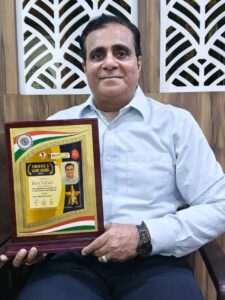
Ravi Valluri is Advisor, Krishnapatnam Railway Company Limited. He has authored both fiction and non-fiction work and is a faculty of the Art of Living. His latest work is Glimpses of Grace. He can be reached at valluri.ravi@gmail.com or WhatsApp at 9618564024.