

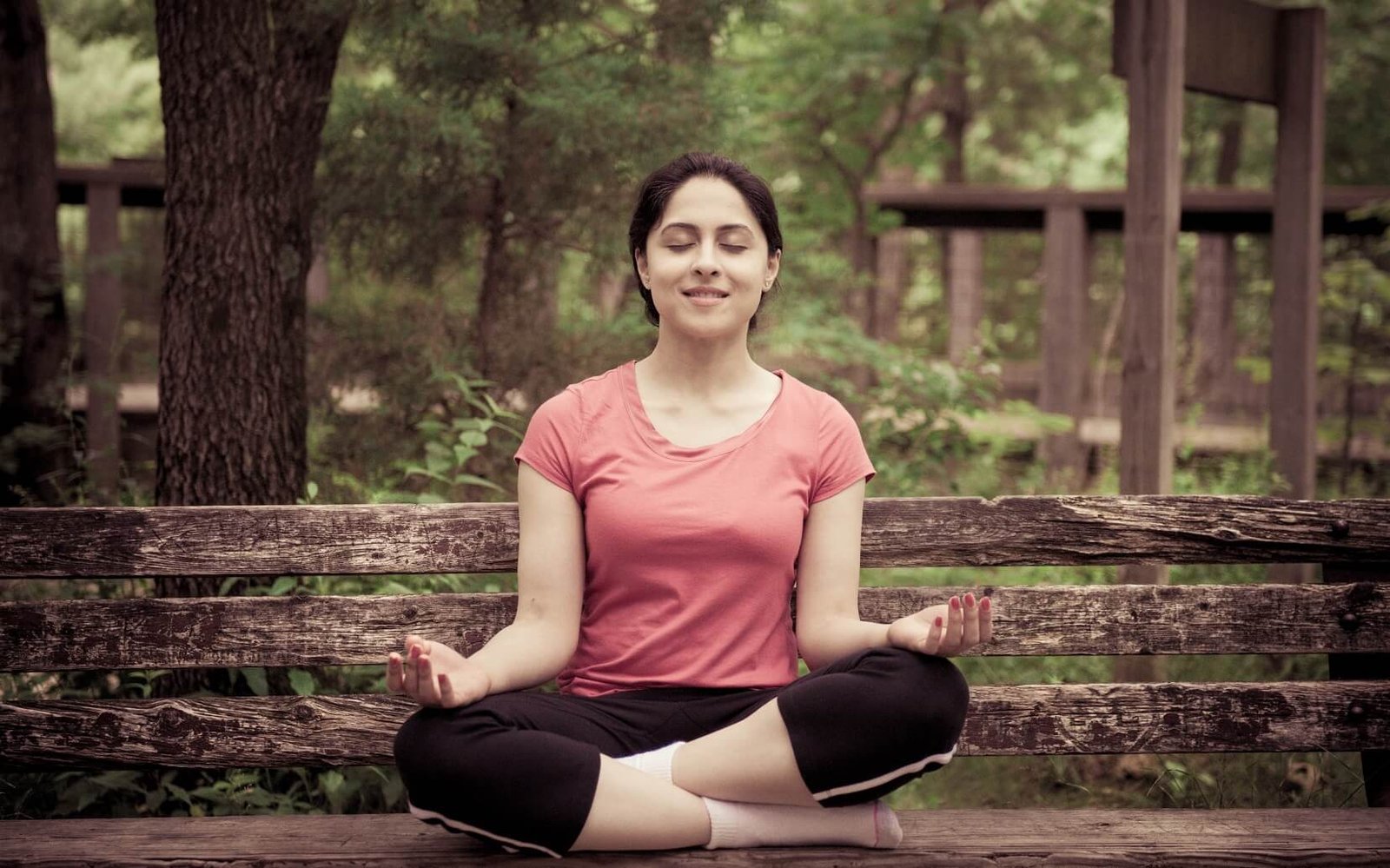
Meditation: Its Importance and Benefits
Dispassion is the key to meditation. In such a state, the mind is not hankering after materialistic goals or objectives. When the human mind drops all desires, it reaches a state of true jollity; it is sanguine and tranquil. In this state of stillness and quietude, the mind is no longer manipulative or strategizing. There is no feeling of restlessness. As Lord Krishna said, “An authentic yogi is one who drops all desires and hankerings and reposes in the self.” This is meditation.
Question-Answer Session
“O, Monarch of Zen, I have been privileged to listen to your erudite lectures for several years,” a mentee remarked during the question-answer session following an intense discourse. “However, I am not perspicacious enough to imbibe the nuggets of wisdom that you have imparted thus far. Therefore, I would be truly beholden if you could encapsulate the essence of Buddhism in a single sentence.”
This irreproachable comment provoked uproarious scenes among the other monks and novitiates at the Temple of Knowledge. However, the Zen Master cogitated on this comment, and soon a resounding silence descended on the monastery following the uproar. Finally, in an earnest and grave tone, he said that the quintessential truth of life is that everything is undergoing constant transformation and transmutation and, therefore, everything in life is impermanent. With that, he signalled that he was ready to field other questions from the assembled gathering.
Impermanence Is an Integral Part of Life
Among the various aphorisms of Buddhism is the singular hypothesis that everything in life is impermanent. The Zen Master deftly and tactfully referred to the concept of impermanence by stating that “everything in life is ever-changing.” This percipient teaching is the bedrock of Sakya Muni Buddha’s teachings and leads one to unearth the secrets of meditation.
An individual could contemplate and muse upon this truth for hours together and yet be unable to grasp the pivotal and cardinal tenets of impermanence. It is a striking feature of all aspects of one’s life. An individual is impermanent; his or her emotions and feelings are transient; the family that one belongs to is evanescent; the dwelling place is momentary; even the majestic universe is not enduring.
This is a foundational aspect of life, as it teaches us the art of detachment. In such a state, one learns to become a witness or a spectator to the events unfolding around us without getting emotionally involved. The mind is at deep rest and ripe to meditate. If, however, an individual clings to the platitudinous notion of permanence, it leads to stasis in life, where one stops evolving and, consequently, melancholia and dolour set in.
Thus, an authentic seeker assimilates this exemplary and prototypical knowledge and is discerning enough to treasure the value of impermanence. The practices of mindfulness and awareness are twin techniques to remain unattached to events, people, situations, possessions and emotions. The triad of awareness, mindfulness and detachment forms the foundation from which emerges the ballast for an individual to meditate.
So, What Is Meditation After All?
Gurudev Sri Sri Ravi Shankar, the spiritual Guru, incisively captures the phenomenon and practice of meditation. The Spiritual Master has elucidated that effort is an act of the body, while meditation is essentially a state of no-mind—an act in which there is no striving or endeavour by an individual. It is significant to state that through regular meditation, humans repose in themselves, reaching a state of deep rest. It is primarily an act of doing nothing.
Benefits of Vipassana
The skill of being able to consciously relax through the unflinching practice of unique rhythmic breathing techniques such as Sudarshan Kriya, Kriya Yoga, Sahaj Samadhi meditation or Vipassana helps one to slip into deep meditation. In such a state of jollity, there is seemingly an umbilical cord with the Divine. Such communion is the singular objective of meditation. This can verily be termed the Gangotri from where the Ganges of self-realisation flows.
Regular meditation helps in mastering various subjects, as it improves the concentration levels of meditators. It must be appreciated that meditation is not concentration but is primarily an act of de-concentration. As negative thoughts and mental cobwebs get purged, the mind becomes clear and unblemished.
It is interesting to note that while awareness and mindfulness help in enhancing the quality of meditation, paradoxically, the reverse is true too. The daily practice of meditation helps an individual develop greater awareness and mindfulness. With enhanced awareness comes the ability to discover oneself and improve interpersonal relationships. Through the techniques of contemplation and introspection, individuals become more benignant and clement towards one another.
We begin to see a mirror image of ourselves in fellow human beings. This enables us to metamorphose from animal instincts to more genteel ones. Authentic meditation teaches us compassion. Studies suggest that meditation can help in assuaging frayed nerves and enhancing the physical and mental well-being of an individual. Some research has also explored its potential role in supporting cardiovascular health, including blood pressure management.
Over a period of time, through the unflinching practice of meditation, individuals are endowed with tremendous clarity of thought and perspicacity. The human mind attains the 3Es of equilibrium, equipoise and equanimity. In such a state, it is not agitated and is always sanguine. Efficacious thoughts spring to the mind. With high levels of intuition, open-mindedness, clear channels in our system, gargantuan mental diminution and composure, we are able to enhance our aura.
This amplifies into unprecedented happenings. This is essentially grace bestowed on us by the divine cosmic energy.
Buddha was once questioned as to how he had profited from meditation. He replied, “I have gained nothing!” However, he went on to say, “Let me tell you what I lost: anger, anxiety, depression, insecurity, fear of old age and death.”
ABOUT THE AUTHOR

Ravi Valluri is Advisor, Krishnapatnam Railway Company Limited. He has authored both fiction and non-fiction works and is a faculty member of the Art of Living. His latest work is Glimpses of Grace.
He can be reached at valluri.ravi@gmail.com or WhatsApp at 9618564024.