

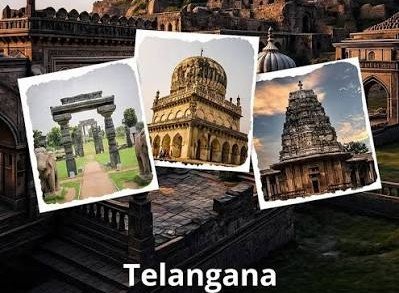
Telangana is one of the youngest states in India, but its landscape is dotted with astonishing historical places.
Telangana shines with its magnificent forts, temples, mosques, palaces and archaeological sites that reflect the influence of various dynasties, such as the Satavahanas, Kakatiyas, Qutb Shahis and Asaf Jahis (Nizams). These sites attract tourists, historians and researchers from around the world.
Some of the most important historical places in Telangana include Charminar, Golconda Fort, Warangal Fort, Ramappa Temple, Thousand Pillar Temple, Bhongir Fort, Chowmahalla Palace and Qutb Shahi Tombs.
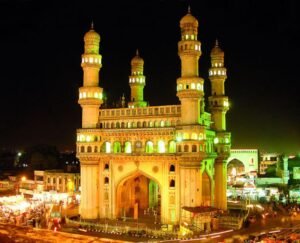
Charminar: The Iconic Symbol of Hyderabad
Charminar is the most famous historical monument in Telangana and the symbol of Hyderabad. It was built in 1591 by Sultan Muhammad Quli Qutb Shah to commemorate the founding of Hyderabad.
The monument has four grand arches and four towering minarets, each rising to a height of about 56 metres. Built with granite and lime mortar, Charminar displays excellent Indo-Islamic architecture. It is surrounded by bustling markets, including the famous Laad Bazaar, known for its bangles and traditional jewellery.
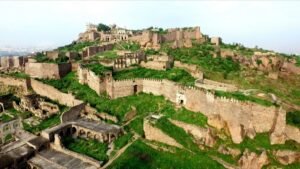
Golconda Fort: A Monument of Engineering and Power
Another astounding historical site is Golconda Fort, located barely 11 kilometres from Hyderabad. Originally built by the Kakatiya dynasty and later expanded by the Qutb Shahi rulers, the fort is famous for its impressive engineering and defence system.
It has massive gates, royal palaces, temples, mosques, gardens and secret passages. One of its unique features is its acoustic system, where a clap at the entrance can be heard at the highest point of the fort.
Golconda was once the centre of the world-famous diamond trade, with precious gems such as the Koh-i-Noor associated with the region. The evening light and sound show at the fort narrates its glorious history and attracts thousands of visitors.
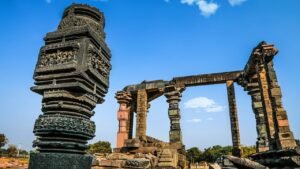
Warangal Fort: A Legacy of the Kakatiyas
Warangal Fort is yet another significant historical monument in Telangana. It was built during the 13th century by the Kakatiya rulers and served as the capital of their kingdom.
Although much of the fort is now in ruins, its majestic stone gateways, sculptures and carved pillars still reflect the artistic excellence of the Kakatiya dynasty.
The famous Kakatiya Kala Thoranam, an intricately carved stone arch, has become the official emblem of Telangana. The fort stands as a reminder of the region’s rich medieval history and architectural brilliance.
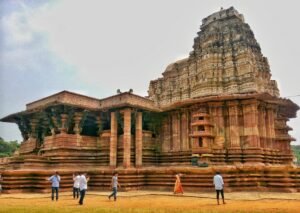
Ramappa Temple: A UNESCO World Heritage Site
The Ramappa Temple, officially known as the Rudreshwara Temple, is located in Mulugu district. Constructed in 1213 CE during the reign of Kakatiya King Ganapati Deva by his general Recharla Rudra, the temple is dedicated to Lord Shiva.
It is renowned for its detailed stone carvings, elegant sculptures and unique lightweight bricks used in the construction of its roof. The temple’s exquisite craftsmanship and innovative engineering earned it recognition as a UNESCO World Heritage Site.
It is considered one of the finest examples of Kakatiya architecture and continues to attract devotees and tourists alike.
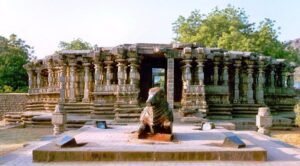
Thousand Pillar Temple: A Kakatiya Masterpiece
The Thousand Pillar Temple in Hanamkonda is a striking masterpiece of Kakatiya architecture. Built in the 12th century by King Rudra Deva, the temple is dedicated to Lord Shiva, Lord Vishnu and Lord Surya.
As its name suggests, the temple is famous for its beautifully carved pillars, each displaying unique artistic designs. The temple also features intricate sculptures, polished stonework and a large monolithic Nandi statue.
It remains an important pilgrimage centre and a valuable symbol of Telangana’s cultural heritage.
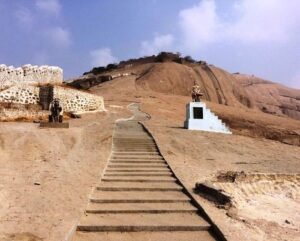
Bhongir Fort: History on a Monolithic Rock
Bhongir Fort, also known as Bhuvanagiri Fort, is located about 50 kilometres from Hyderabad. Built in the 10th century by the Western Chalukya ruler Tribhuvana Malla Vikramaditya VI, the fort stands atop a massive monolithic rock more than 500 feet high.
The fort’s strategic location provided excellent defence against enemies. Visitors can explore its gateways, underground chambers, water reservoirs and breathtaking viewpoints.
Today, Bhongir Fort is a popular destination for history lovers, trekkers and adventure enthusiasts.
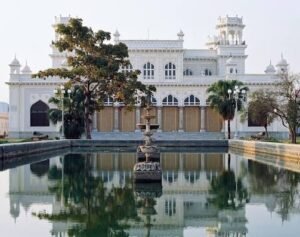
Chowmahalla Palace: The Royal Legacy of the Nizams
Chowmahalla Palace is one of the most elegant royal residences in Hyderabad. It served as the official palace of the Nizams of Hyderabad during the Asaf Jahi dynasty.
It was constructed in the 18th century. The palace complex consists of grand halls, beautiful courtyards, fountains and lush gardens. The magnificent Durbar Hall, with its sparkling chandeliers and luxurious decorations, showcases the royal lifestyle of the Nizams.
The palace museum displays vintage cars, royal costumes, manuscripts and weapons, offering visitors a glimpse into Hyderabad’s princely past.
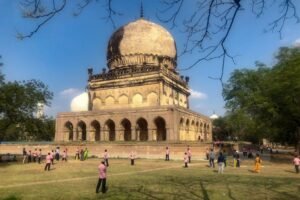
Qutb Shahi Tombs: Royal Mausoleums of Golconda
The Qutb Shahi Tombs, located near Golconda Fort, form one of the largest groups of royal mausoleums in India. These tombs were built for the rulers of the Qutb Shahi dynasty, who governed the Golconda Kingdom from the 16th to the 17th century.
Each tomb combines Persian, Indian and Islamic architectural styles, featuring graceful domes, elegant arches and beautiful carvings. The well-maintained gardens surrounding the tombs enhance their beauty and provide a peaceful atmosphere for visitors.
Beyond the Famous Monuments
In addition to these famous monuments, Telangana has several other historical and cultural attractions, such as Medak Fort, Elgandal Fort, Basar Saraswati Temple, Alampur Temples and the ancient Buddhist sites at Phanigiri.
These places reveal the state’s diverse religious traditions and long history of artistic and architectural achievements. They contribute significantly to Telangana’s tourism and educational importance.
The historical places of Telangana represent the glorious legacy of various dynasties that ruled the region over centuries. These monuments reflect remarkable achievements in architecture, engineering, art and culture. They serve as valuable reminders of India’s rich historical heritage and inspire people to appreciate and preserve the past.
Visiting these sites provides an opportunity to learn about the traditions, beliefs and lifestyles of earlier civilizations. As symbols of pride and identity, the historical places of Telangana continue to attract millions of visitors and remain an integral part of India’s cultural heritage.
“I cannot look at modern history without thinking of historical ones,” wrote British designer and author Kevin McCloud.
ABOUT THE AUTHOR
Ravi Valluri is Advisor, Krishnapatnam Railway Company Limited. He has authored both fiction and non-fiction work and is a faculty of the Art of Living. His latest work is Glimpses of Grace. He can be reached at valluri.ravi@gmail.com or WhatsApp at 9618564024.