

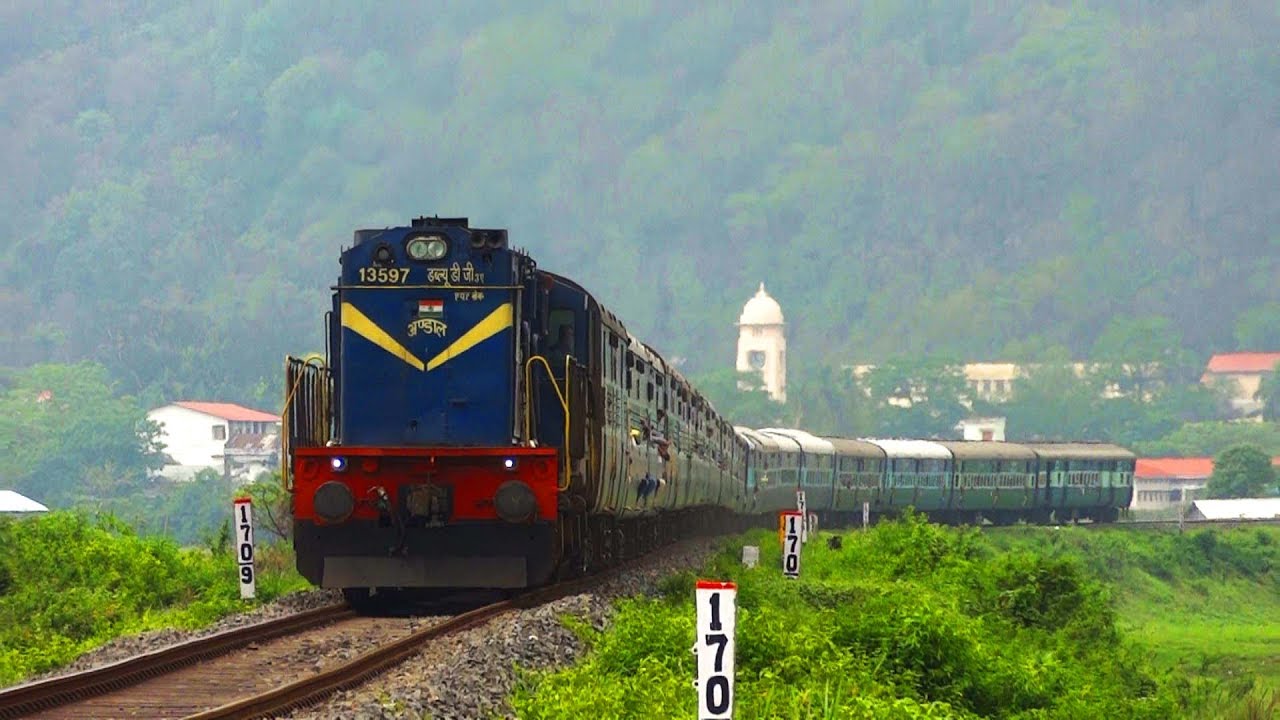
“Bizarre travel plans are dancing lessons from God,” wrote Kurt Vonnegut, the celebrated American novelist and pioneer of postmodern literature. One wonders whether travelling aboard the Vivek Express—from Dibrugarh in Assam to Kanyakumari at the southernmost tip of mainland India—would qualify as one such lesson.
The answer comes readily in the words of Canadian artist Ed Hanley: “If all journeys are teachers, it may well be that a journey to India is the greatest teacher of all.” Few journeys embody this sentiment better than the Vivek Express, India’s longest train journey by both distance and duration.
This 4,273-kilometre odyssey is certainly an undertaking for the curious traveller, exposing passengers to a rich tapestry of cultures, landscapes and traditions stretching from the verdant plains of Assam to the shores where three seas meet in Kanyakumari.
As someone from South India who has worked on the North East Frontier Railway, headquartered at Maligaon in Guwahati, Assam, one can seamlessly relate to this remarkable journey. Dibrugarh falls under the Lumding Division, an archetypal railway region and a vital junction providing connectivity to the North-Eastern states of Tripura, Mizoram, Arunachal Pradesh, Nagaland and Manipur.
Among the many fascinating locations in the region is Jatinga, a station on the Lumding–Badarpur line. The area has long been known for the mysterious phenomenon of bird disorientation, which has intrigued ornithologists and travellers alike for decades.
Now back to the long haul between Dibrugarh and Kanyakumari aboard the Vivek Express. Ed Hanley, a Toronto-based multi-dimensional artist, wears many hats—photographer, performer, producer, cinematographer, recording engineer, video editor, writer and, above all, a tabla player. His reflections capture the essence of this journey. As iron wheels strike steel rails, the rhythmic cadence resembles a tabla composition accompanying an ever-changing panorama of India’s vast hinterland.
Indian Railways’ Train No. 15906, the Dibrugarh–Kanyakumari Vivek Express, traverses 4,273 kilometres as it winds its way from the north-eastern corner of Assam to the southernmost tip of mainland India. The journey takes approximately 85 hours, earning it the distinction of being India’s longest train journey in terms of both distance and travel time. It is undoubtedly a test of patience, endurance and temperament.
The journey begins under the cover of darkness. As dawn breaks over the mighty Brahmaputra—often referred to in folklore as India’s only “male” river—travellers catch glimpses of the picturesque hill station of Diphu emerging through a veil of mist.
The train comprises 21 coaches and carries more than 1,800 passengers, several times the capacity of a modern jetliner. Accommodation ranges from AC Two-Tier and AC Three-Tier coaches to Sleeper Class and unreserved compartments. Mahatma Gandhi famously travelled third class and, when asked why, quipped that it was because there was no fourth class.
A pantry car serves passengers throughout the journey, offering a variety of meals to satisfy diverse palates. As part of Indian Railways’ cleanliness initiatives, the train is equipped with bio-toilets, a significant improvement over older systems that often posed hygiene challenges.
Tea is a ritual in India, and savouring steaming cups of chai on trains and station platforms is an inseparable part of the travel experience. Most passengers soon lose count of the number of cups consumed. As the train moves southward, tea gradually gives way to coffee. Eastern delicacies are replaced by South Indian staples such as vada, idli, dosa and upma, accompanied by spicy sambar.
The romance of long-distance rail travel lies in its simple pleasures. Passengers witness three sunsets from their windows, each unique in colour and mood. Smartphones emerge, photographs are clicked, and fleeting moments are preserved for posterity.
Indian Railways, among the world’s largest rail networks, employs approximately 1.3 million people. With over 65,000 route kilometres, thousands of stations and millions of passengers transported daily, its scale is staggering. One cannot help but marvel at the engineering, organisation and infrastructure that make such journeys possible.
The Vivek Express first winds its way westward through Assam before travelling south overnight through the Siliguri Corridor, popularly known as the “Chicken’s Neck” — a narrow strip of land connecting mainland India to the North-East. The following morning finds passengers passing through Durgapur in West Bengal before entering Odisha later in the day. By evening, the train rolls through Srikakulam in Andhra Pradesh.
The next major halt is Vijayawada Junction after crossing the Krishna River. Travellers can also spot the imposing Dr NTR Thermal Power Station in Andhra Pradesh. Vijayawada remains one of India’s busiest railway stations and a vital hub in the national rail network.
On the third day, passengers pass through Nellore, home to the rapidly developing Krishnapatnam Port. Soon after crossing Gudur Junction, the train enters the splendour of Tamil Nadu just in time for afternoon tea.
As night falls, the train turns westward into lush, coconut-lined Kerala. The final sunrise of the journey greets passengers as the train approaches Thiruvananthapuram, Kerala’s capital city. By late morning, the Vivek Express finally rolls into Kanyakumari, bringing its epic journey to an end.
More than a train journey, the Vivek Express is a moving panorama of India itself—a nation of extraordinary diversity bound together by invisible threads of culture, history and shared experience. Covering a distance that rivals journeys across continents, it offers travellers a rare opportunity to witness the changing face of India from a railway window, one station at a time.
ABOUT THE AUTHOR
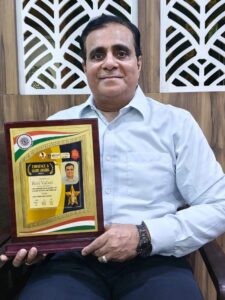
Ravi Valluri is Advisor, Krishnapatnam Railway Company Limited. He has authored both fiction and non-fiction work and is a faculty of the Art of Living. His latest work is Sita to Abhaya: Have Things Changed? He can be reached at valluri.ravi@gmail.com or WhatsApp at 9618564024.