
“Each person had a name. Each person was loved by someone. Let us ensure that their deaths were not in vain.”
These were the iconic words of Setsuko Thurlow, a survivor of the August 1945 atomic bombing of Hiroshima, during her Nobel Peace Prize acceptance speech in 2017.
August is indeed the month to recall the macabre events of the Second World War. The key takeaway is how to mitigate the agonies inflicted by conflict and allow the voice of reason and sanity to prevail. Yet, the rapacious appetite and avarice of mankind are such that scarcely does one conflict end before another appears on our doorstep.
In the spring of 1988, in New Delhi, I stepped with great trepidation into the imposing Union Public Service Commission building on Shah Jahan Road. It is within the chambers of this institution that the dreams of lakhs of aspiring civil servants from across the country are tested.
Mock drills and interviews instill a sense of confidence, but more often than not, a candidate is flummoxed by the enormity of the occasion and the array of questions posed by an esteemed interview board.
“Well, Mr. Valluri, one of your optional papers was History, despite studying Commerce and Business Economics. What do you know about the ‘Little Boy’ and the ‘Fat Man’?” the head of the interview board asked in a stentorian voice.
For a moment, I was rattled by the intensity of the question, but I quickly regained my composure.
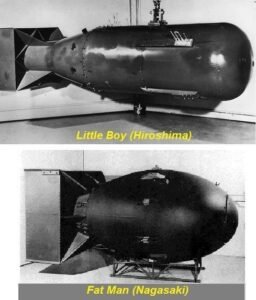
The United States of America detonated two atomic bombs over the Japanese cities of Hiroshima and Nagasaki in 1945. The bombings caused widespread destruction, claiming hundreds of thousands of lives and leaving countless others with life-altering injuries. Their effects continue to resonate to this day.
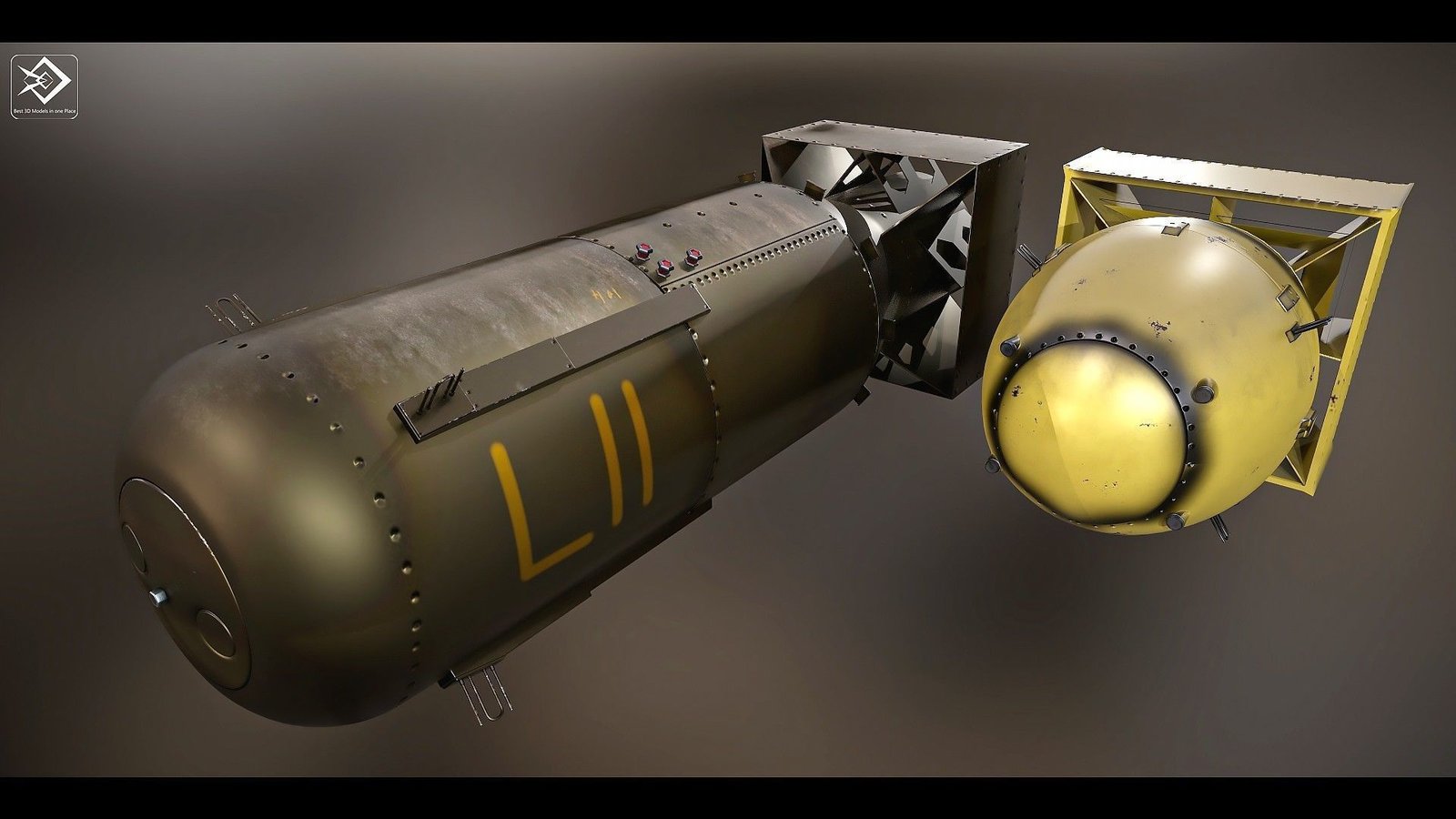
In the lexicon of American warfare, these bombs were known as the “Little Boy” and the “Fat Man.”
The uranium bomb dropped over Hiroshima had an explosive yield equivalent to approximately 15,000 tonnes of TNT. It destroyed nearly 70 percent of the city’s structures and resulted in an estimated 140,000 deaths by the end of 1945.
Those who survived the bombing were later afflicted by cancer and other chronic illnesses, highlighting the devastating long-term consequences of nuclear warfare.
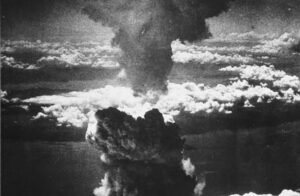
Three days later, a plutonium bomb exploded over Nagasaki, flattening nearly 6.7 square kilometres of the city and killing an estimated 74,000 people by the end of 1945. Reports also indicated temperatures reaching nearly 4,000°C at the hypocentre, followed by radioactive rainfall, underscoring the catastrophic impact of the explosion.
What prompted America to launch the atomic strikes?
Relations between Japan and the United States deteriorated sharply as Japanese forces expanded into Indochina with the objective of securing the oil-rich regions of the East Indies.
In response, the United States imposed embargoes on scrap metal, oil, and aviation fuel destined for Japan, while freezing Japanese assets in America. Washington also demanded that Japan withdraw its forces from China and Indochina.
As tensions escalated, Japanese aircraft launched a surprise attack on the U.S. naval base at Pearl Harbor on December 7, 1941, bringing the United States formally into World War II. The attack sank several warships, destroyed hundreds of aircraft, and claimed thousands of lives. Japan’s objective was to cripple the U.S. Pacific Fleet, and it came close to achieving that goal.
The ensuing war proved extremely costly. Years of fierce fighting brought American forces ever closer to Japan through their island-hopping campaign. The Japanese resistance remained formidable, and each military victory came at a heavy cost.
Following President Franklin D. Roosevelt’s death on April 12, 1945, Harry Truman assumed office and faced the challenge of bringing the war to an end. Truman and his advisers were wary of invading mainland Japan, fearing massive casualties due to fierce Japanese resistance, including kamikaze attacks.
Upon assuming the presidency, Truman was briefed on the Manhattan Project, the secret American programme to develop the atomic bomb.
He later approved the use of the weapon and issued the Potsdam Declaration, demanding Japan’s unconditional surrender while warning of “prompt and utter destruction” if it refused.
Eleven days later, on August 6, 1945, the American bomber Enola Gay departed Tinian Island for Japan after Tokyo rejected the surrender demand.
Carried within the aircraft was the deceptively named “Little Boy,” an atomic bomb. At 8:15 a.m. Hiroshima time, it was dropped over the city, causing unprecedented devastation.
On August 9, 1945, another American bomber headed for Nagasaki carrying the “Fat Man.”
When the bomb exploded, approximately 39,000 men, women, and children were killed instantly, while another 25,000 suffered severe injuries.
The devastation of Hiroshima and Nagasaki ultimately paved the way for Japan’s surrender, bringing World War II to an end.
It is said that after witnessing the first successful nuclear test on July 16, 1945, physicist Robert Oppenheimer recalled a verse from the Bhagavad Gita: “Now I am become Death, the destroyer of worlds.”
Today, science has advanced tremendously, and the world possesses nuclear arsenals far more powerful than the “Little Boy” and the “Fat Man.” It is for policymakers and world leaders to ensure that such weapons are never again used to inflict devastation upon humanity.
About the Author
Ravi Valluri is Advisor, Krishnapatnam Railway Company Limited. He has authored both fiction and non-fiction works and is a faculty member of the Art of Living. His latest work is Glimpses of Grace. He can be reached at valluri.ravi@gmail.com or WhatsApp at 9618564024.