

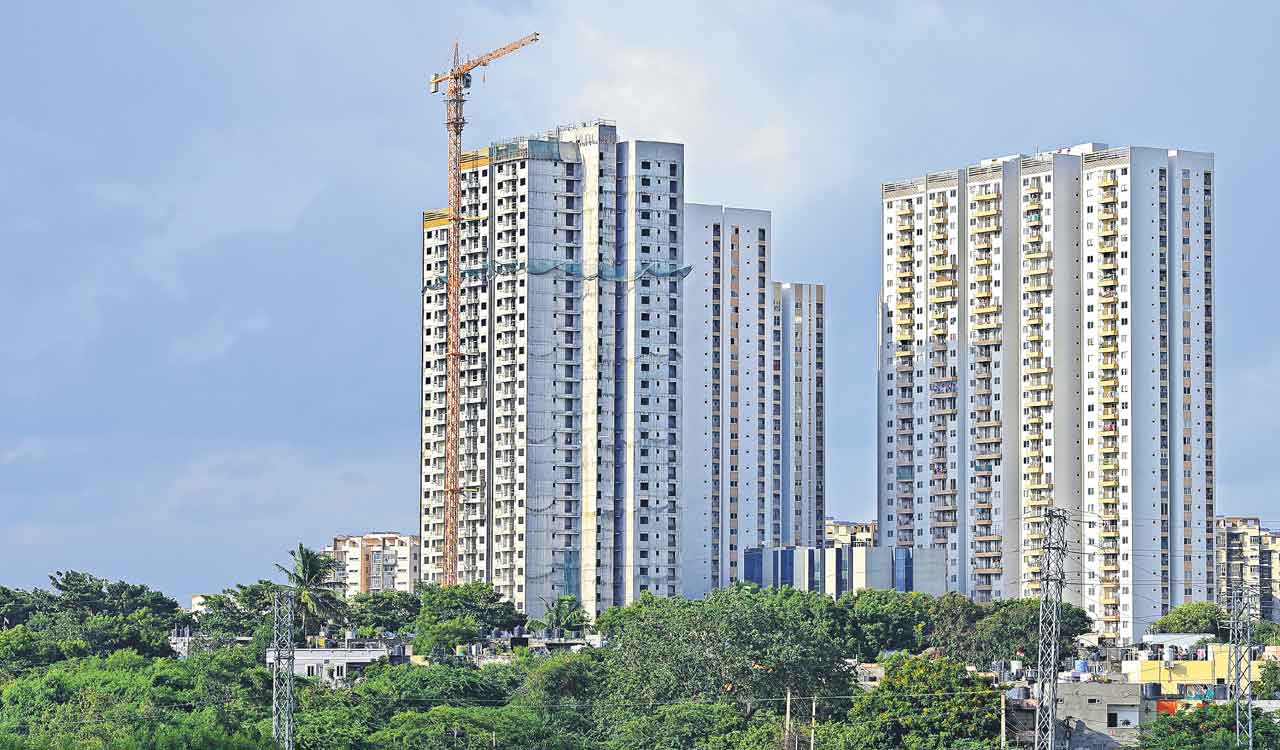
Hyderabad: Telangana government’s revised Transferable Development Rights (TDR) policy has triggered strong reactions from the real estate sector, with builders and developers expressing concern that the new norms could significantly increase construction costs and eventually make housing more expensive in Hyderabad.
The latest policy changes, aimed at strengthening urban planning and easing land acquisition for public infrastructure projects, have widened the scope of TDR usage in several building categories, particularly high-rise developments. However, developers argue that making TDR usage mandatory in many projects has sharply increased demand for TDR certificates, pushing prices upward and affecting project viability.
What is TDR?
Transferable Development Rights is a mechanism under which landowners whose land is acquired for public purposes such as road widening, flyovers, parks, drainage systems, and civic infrastructure are compensated through development rights instead of direct cash payments. These rights can then be sold to developers, who use them to gain additional construction potential in eligible zones.
The government views TDR as a practical tool for faster infrastructure expansion while reducing the burden of immediate compensation payouts.
Key Changes in the New Policy
Under the revised rules, developers of taller buildings are required to use TDR for additional construction rights in certain cases. Industry sources say the revised framework includes:
- TDR requirements for multi-storey and high-rise buildings
- Increased usage norms for towers above specified heights
- Part payment of TDR at approval stage and balance before occupancy certification
- Relaxations in some setback norms through TDR provisions
- Expanded applicability in selected urban zones
Officials believe the move will streamline city development, improve road networks, and help implement long-pending civic projects.
Why Builders Are Upset
Developers say the new rules have created an artificial surge in demand for TDR certificates, resulting in higher prices. Since TDR now becomes an additional mandatory component in several projects, the cost burden ultimately shifts to the builder and then to homebuyers.
According to industry stakeholders, Hyderabad’s real estate market has remained relatively attractive due to competitive pricing compared to other metro cities. They fear that increased compliance costs may reduce this advantage.
Builders also argue that a uniform policy may not suit every location. While premium corridors and commercial zones may absorb higher costs, mid-market residential areas may struggle with reduced affordability.
Some developers have warned that if costs continue to rise, project launches may slow down, especially in the affordable and mid-income housing segments.
Government’s Position
The Telangana government has maintained that TDR is essential for planned urban growth. Hyderabad is expanding rapidly, and major investments are needed in roads, drainage, transport corridors, and civic amenities. Officials believe TDR allows faster implementation of such works without immediate large-scale public expenditure.
The government also sees the policy as beneficial for landowners, who receive tradable rights that may appreciate in value rather than fixed compensation.
Sources indicate that authorities remain open to industry feedback and may consider practical adjustments if required.
Impact on Homebuyers
If TDR prices remain elevated, analysts say buyers could face higher apartment prices in upcoming projects. This may be more visible in fast-growing areas such as western Hyderabad, IT corridors, and peripheral growth zones where demand for new housing remains strong.
Higher input costs may also affect commercial real estate, office towers, and mixed-use developments.
What Lies Ahead
The issue is likely to remain a major talking point in Telangana’s property market in the coming months. Builders are expected to seek further consultations with the government, requesting flexibility and location-specific implementation.
A balanced approach that supports infrastructure development while keeping housing affordable will be crucial. With Hyderabad continuing to attract investment and population growth, the outcome of the TDR policy debate could shape the city’s next phase of real estate expansion.