

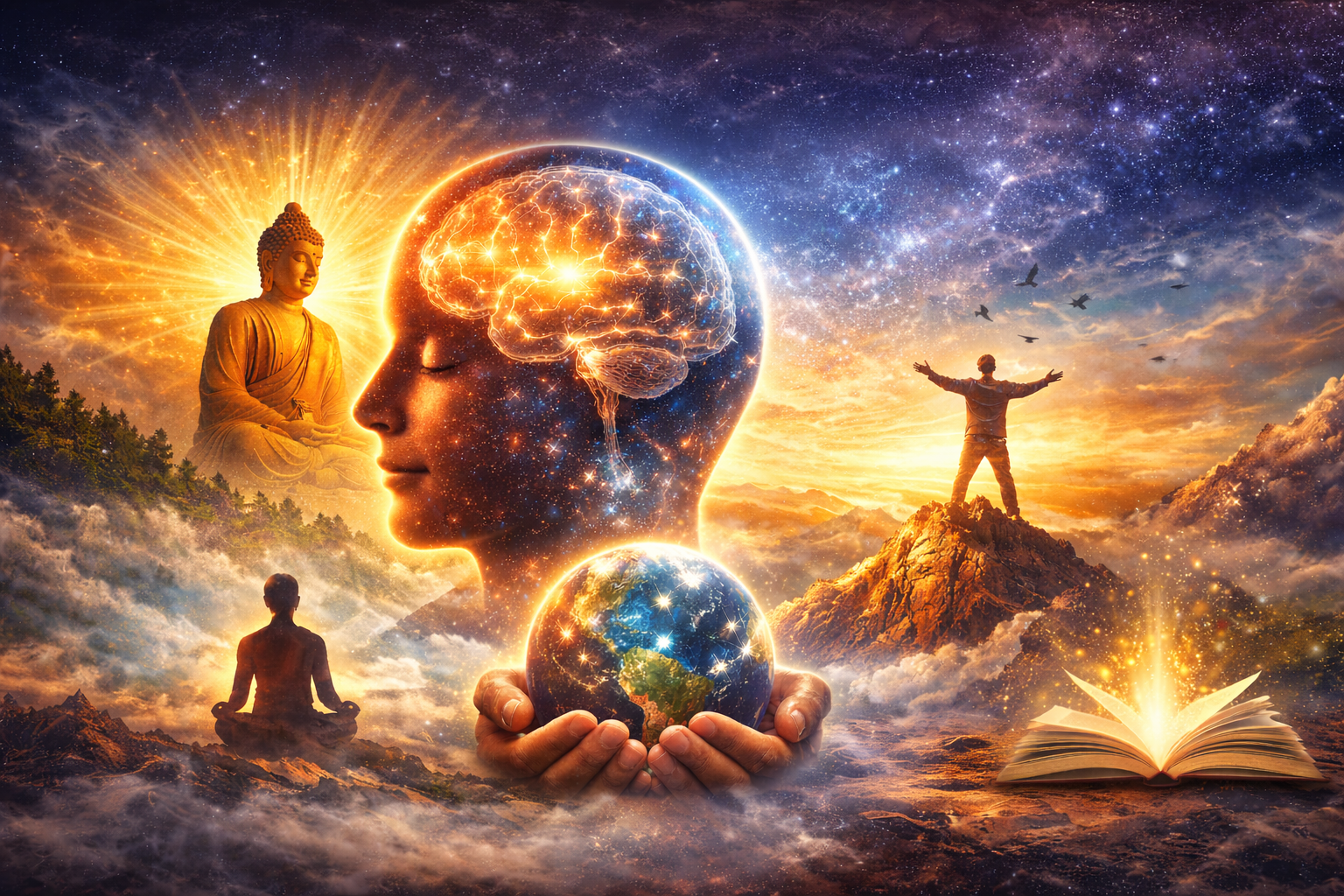
Realisation and awareness are two unique qualities that illuminate the astonishing power of the human mind.
Aeons ago lived an ambitious king named Suddhodhana, chieftain of the Sakyan republics. He was captivated by the thought of perpetuating his dynasty. However, his battle-fatigued son Siddhartha was not ensnared by the Mara of trappings and adornments of power, carnal pleasures or family life. Siddhartha eschewed violence, cast away royal clothing and donned ochre robes in search of the quintessential truth.
Over a period of seven years of intense and gut-wrenching tapas, which transfigured his mind, he metamorphosed from Siddhartha to Gautama and then into the Buddha. It was at Sarnath that he delivered his first sermon on the Four Noble Truths, followed soon by the Eightfold Path for citizens to pursue.
Upon attaining enlightenment, the Compassionate One dissected the bewildering characteristics of the human mind. He declared, in an unostentatious and lucid manner, “We are what we think, and our thoughts shape our lives.” A person may be an ordinary individual, a seeker or a savant; all are governed by this cardinal principle of how the mind operates.
When the mind is endowed with efficacious thoughts, humans are blessed with an enriching aura of positivity. This eclipses Sisyphean and nugatory thoughts, and the persona is encompassed by an alluring, shimmering jollity. However, when the human mind is cannonaded by antipathetic thoughts, there is a depletion of prana.
The mind then ceases to be resplendent or robust, nor is it suffused with ennobling thoughts. Instead, it becomes brimful of gloom-ridden patterns that are distressing and obstructive. Individuals turn into mere retainers of negativity. Over time, the mind fails to become empowered, unable to unyoke itself from negativity, rendering a person incapable of embracing responsibility or maturity.
Ironically, the moment an individual realises the magnetic potential and prowess of the human mind, the universe suddenly appears magical in its desire to support all efforts. The mind remains an enigma. Resoluteness and positivity are the lodestars to harness its latent ability. This is the key to scaling the summit of triumph and glory.
Once there was a Good Samaritan, Sudhakar (name changed). He happened to read the maiden effort of a civil servant titled Enormous Vistas of the Human Mind and a few other articles written by him. With some trepidation, he became a ‘Facebook friend’ of the mandarin and began persuading him to be interviewed by a few television channels.
However, the thought process of the public functionary—a recovered alcoholic—kept misdoubting the sincerity of this ‘Facebook friend’. In disgust, he blocked and later unblocked the gentleman, perhaps to quell the pangs of his own conscience. Finally, in a dawdling manner and in sheer vexation, he gave in to the entreaties.
Soon, an amazing pattern emerged. The government administrator was invited by several media houses and esteemed institutions to speak about how he combated and conquered the battle against the bottle. Only later did he realise that Sudhakar had lost close relatives to alcoholism and found solace in espousing the cause of overcoming the disease.
The autarchic mind of the bureaucrat had been ossified, viewing life through the prism of tunnel vision. One day, after a series of interviews, he received a distress call from a woman who had listened to one of his interviews and was reading the book that chronicled his triumph over alcoholism.
He empathised deeply with her husband, who was fighting a grim battle against addiction. Silently thanking Sudhakar for providing a platform to address this grievous misadventure afflicting millions, the public servant experienced a sudden transmutation of mind. As tears of gratitude flowed, he embarked upon an odyssey to combat this life-threatening disease with renewed sincerity.
Several centuries ago, Gautama Buddha was travelling with a group of disciples. Feeling thirsty, he asked one disciple to fetch water from a nearby lake. The enthusiastic disciple rushed there but found the water turbid, as a farmer had just crossed it with a bullock cart. He returned apologetically.
Buddha sent him again and again, yet each time the water remained muddy. While the disciples grew restless, Buddha remained patient. Eventually, the devotee returned with clear water. Smiling, Buddha drank it and said, “You did nothing. The mud settled down, and the water was purified. Let your mind also settle the dust accumulated over time.”
Make no effort; let the mind settle.
Sri Sri Ravi Shankar succinctly observes, “Effort is a state of the body, and effortlessness is a state of the mind.” This can be achieved through regular and unwavering sadhana—yoga, pranayama, meditation and the unique rhythmic breathing technique of Sudarshan Kriya.
Effortlessness, thus, is the trailblazing quality of the mind. It is a state of total surrender, where the grace of the Guru flows and miracles unfold.
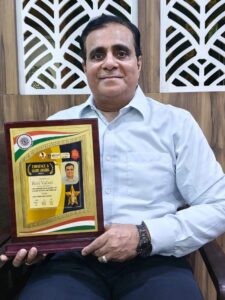
About the Author
Ravi Valluri is Advisor, Krishnapatnam Railway Company Limited. He has authored both fiction and non-fiction works and is a faculty member of the Art of Living. His latest book is Sita to Abhaya: Have Things Changed? He can be reached at valluri.ravi@gmail.com or via WhatsApp at 9618564024.