

Telangana Rising 2047: Strategic Engagement with TATA at Davos Signals Long-Term Partnership
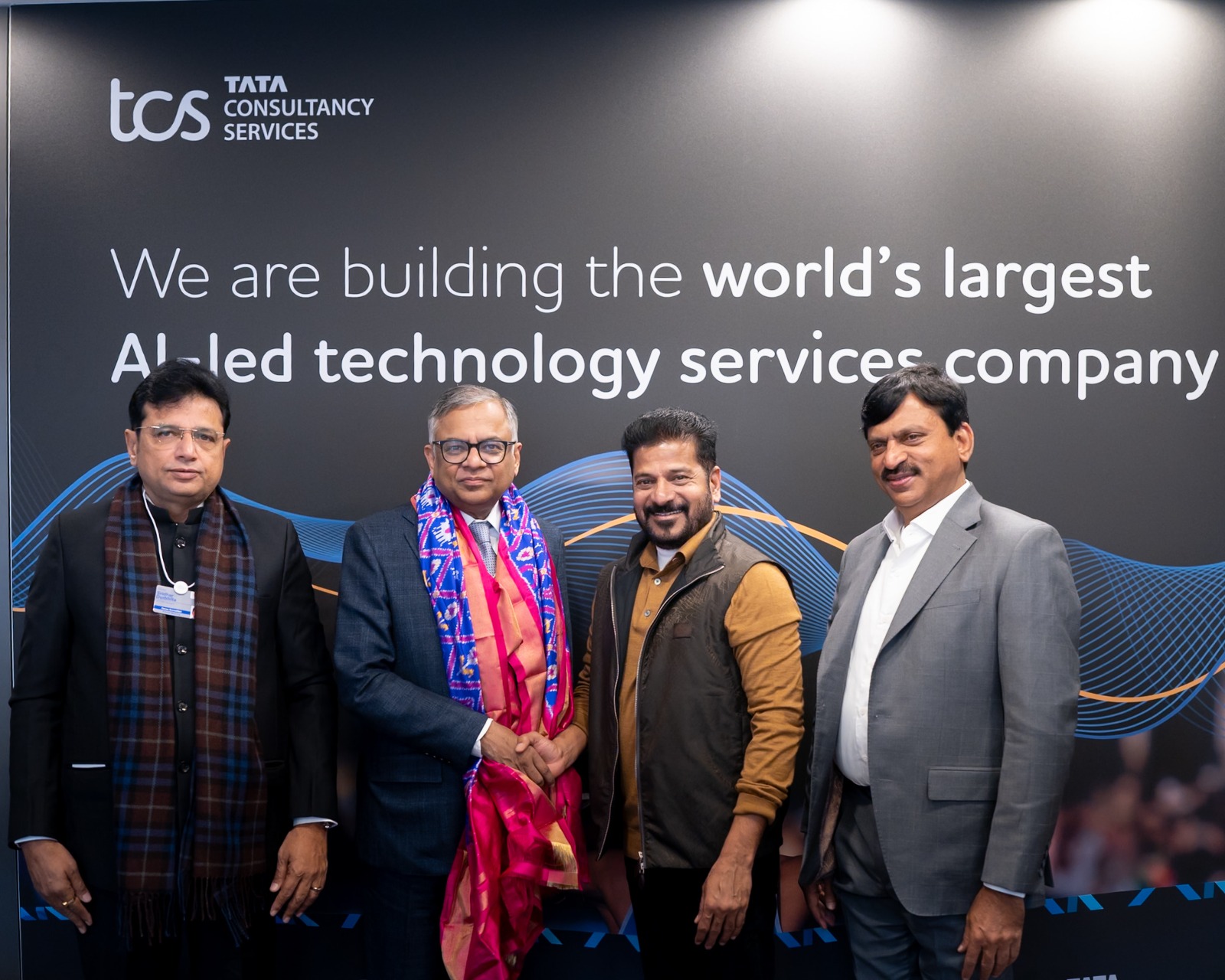
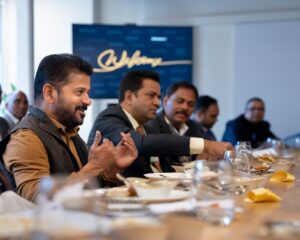
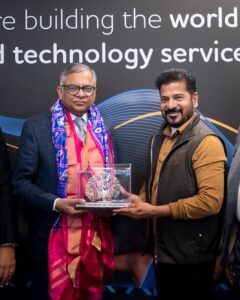
The ‘Telangana Rising’ delegation, led by Hon’ble Chief Minister A. Revanth Reddy, began Day 2 of the World Economic Forum (WEF) 2026 on a high note with a constructive and outcome-oriented breakfast meeting with Natarajan Chandrasekaran, Chairman of Tata Group, at the TCS Pavilion in Davos.
Rather than chasing immediate investments, the Telangana delegation used the Davos platform to comprehensively present its long-term development roadmap, anchored in the ambitious Telangana Rising 2047 vision. The presentation detailed the state’s policy ecosystem, growth frameworks, and institutional reforms designed to transform Telangana into a $3 trillion economy by 2047.
Impressed by the clarity and depth of planning, Chandrasekaran lauded the state government’s approach of prioritising vision, policies, and ecosystem-building over transactional investment pitches. He noted that Telangana’s focus on talent, innovation, and infrastructure places it among the most forward-looking states in the country.
Skills, Education and Institutional Transformation
Chief Minister Revanth Reddy highlighted the successful collaboration between the Telangana government and Tata Technologies in upgrading 65 government Industrial Training Institutes (ITIs) into Advanced Technology Centres (ATCs). Building on this momentum, he shared plans to transform government polytechnic colleges into advanced skill development centres aligned with future industry needs.
On the higher education front, the delegation briefed the Tata Chairman about the launch of the Young India Skills University (YISU), an institution conceived to bridge the skills gap and prepare youth for next-generation industries. Chandrasekaran took note of the initiative and appreciated the vision behind it, including the leadership of Anand Mahindra as Chair of the Board of Governors.
Sports Infrastructure and Olympic Ambitions
A key highlight of the discussion was Telangana’s ambitious sports vision. The Chief Minister outlined plans for the Young India Sports University and the state’s goal of creating world-class sports infrastructure to help India emerge as a serious medal contender at the 2036 Olympics.
Revanth Reddy specifically pitched the proposal to upgrade major stadiums in Hyderabad with Tata Group’s support. Chandrasekaran responded positively, agreeing to engage on the proposal and stressing the importance of global-standard sports infrastructure to harness India’s immense athletic talent. The Chief Minister emphasised the need to identify and train children at an early age to compete effectively on the world stage.
Hospitality, Manufacturing and Future Industries
The meeting also explored opportunities in hospitality and tourism. Chandrasekaran expressed the Group’s inclination to establish hotels and resorts across Telangana, particularly in major temple towns such as Medaram, Vemulawada, and Bhadrachalam. Discussions also covered the possibility of developing a world-class business and leisure resort along the Srisailam highway, leveraging the region’s natural, cultural, and religious significance. The Tata Chairman welcomed the proposal and conveyed readiness to move forward.
In addition, Chandrasekaran indicated strong interest in setting up new manufacturing facilities in Telangana, including in emerging sectors such as AI data centres, semiconductors, and electric vehicle manufacturing, citing the state’s talent base and infrastructure edge.
Musi Riverfront and Urban Transformation
A significant portion of the dialogue focused on urban renewal, particularly the transformation of the Musi River. Chief Minister Revanth Reddy detailed plans to rejuvenate the Musi riverfront, develop a vibrant night-time economy, address traffic bottlenecks through innovative infrastructure solutions, and create iconic public spaces such as the proposed ‘Gandhi Sarovar’.
Responding enthusiastically, Chandrasekaran offered Tata Group’s support for the Musi rejuvenation project, drawing on the Group’s experience in water body restoration initiatives in Rajasthan and Maharashtra. He expressed confidence that Musi could evolve into a powerful economic growth engine for Telangana.
Infrastructure, Legacy and Vision
The Chief Minister also shared the proposal to name a key greenfield expressway connecting Bharat Future City with the Outer Ring Road (ORR) and Regional Ring Road (RRR) as the Ratan Tata Road, underscoring the state’s respect for the late industrialist Ratan Tata. Plans to install a statue of Ratan Tata in Hyderabad were also conveyed.
Senior ministers, including D. Sridhar Babu and Ponguleti Srinivasa Reddy, reiterated that Telangana’s focus at WEF 2026 is on promoting long-term vision, policy stability, and sustainable regional economic growth, building on the momentum of the recently concluded Telangana Rising Global Summit.
The Davos engagement with Tata Group marked a decisive step in Telangana’s strategy to forge enduring partnerships that align with its Vision 2047—signalling that the state is not just investment-ready, but future-ready.