

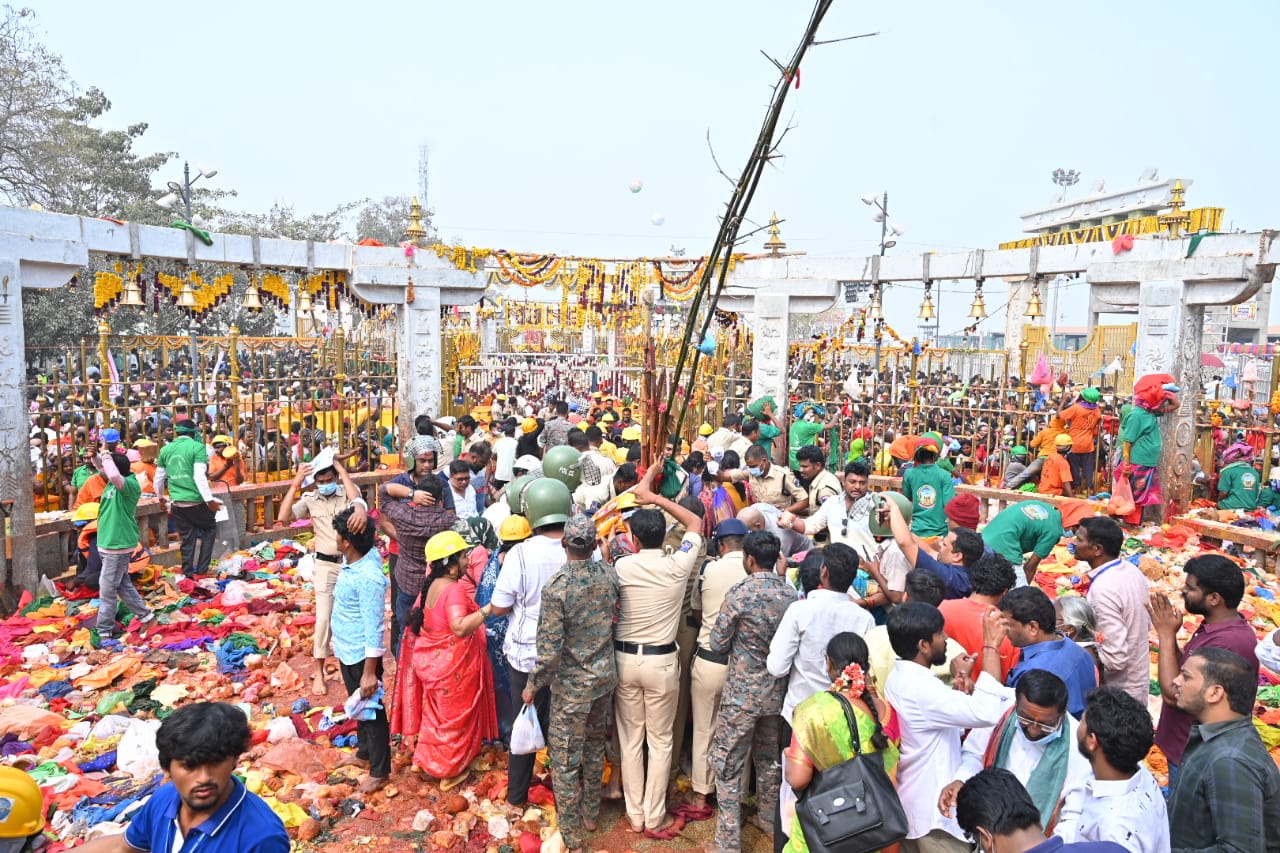
Medaram: The world-renowned Medaram Sri Sammakka–Saralamma Mahajathara witnessed an overwhelming surge of devotees on its third day, turning the sacred forest region of Medaram into a vast ocean of faith. Among the four days of this iconic tribal festival, the third day is traditionally considered the most significant—and this year was no exception, as lakhs of devotees thronged the holy site from across India and abroad.
Despite the unprecedented crowd, the meticulously planned arrangements by the administration ensured smooth movement of pilgrims and hassle-free darshan. Effective crowd management, traffic regulation, sanitation, medical services, and security measures drew widespread appreciation from devotees, making the third day a testimony to efficient governance and careful planning.
Adding to the spiritual significance of the day, Jishnu Dev Varma, the Hon’ble Governor of Telangana, visited Medaram along with his wife. The Governor offered prayers to the Ammavarlu and sought blessings for the peace, prosperity, and well-being of the people of the state. His visit highlighted the cultural and spiritual importance of the Medaram Jathara, which is widely regarded as the largest tribal congregation in the world.
From the early hours of the day, devotees gathered in large numbers at the sacred Jampanna Vagu, taking a holy dip as per tradition before proceeding for darshan of Goddess Sammakka and Goddess Saralamma. The sight of devotees—especially women—dressed in traditional attire, carrying offerings on their heads and chanting devotional slogans, reflected the deep-rooted faith associated with the Jathara. Women’s participation stood out prominently, symbolizing devotion passed down through generations.
One of the major highlights of this year’s Jathara was the newly developed cultural landscape around the sacred Gaddelu area. Massive stone pillars adorned with intricate tribal carvings have been installed, showcasing indigenous art inspired by ancient tribal traditions. These carvings vividly depict local tribal life, symbols, folklore, rituals, and traditional practices through fine stone craftsmanship.
Developed after extensive consultations with historians, tribal elders, local communities, and the Jathara Committee, these structures reflect nearly 800 years of tribal cultural heritage. They not only enhance the aesthetic appeal of the sacred site but also reinforce the historical and cultural significance of the Sammakka–Saralamma Jathara. Built on the initiative of the government led by A. Revanth Reddy, these cultural installations represent a meaningful blend of tradition, preservation, and modern development, emerging as a special attraction of the 2026 Jathara.
The third day also showcased the vibrant spirit of tribal folk culture. Traditional rituals such as Punakkam drew the attention of devotees and visitors alike. According to tribal belief, during Punakkam, the deity is said to reside in the devotee’s body, and symbolic whipping is performed to bless devotees. Far from being an act of pain, it is considered a sacred expression of devotion and divine grace. Accompanied by rhythmic drumbeats, tribal dances, folk songs, and powerful visual expressions, the entire atmosphere resonated with spiritual intensity and cultural pride.
Another defining feature of the Medaram Jathara is the unique offering of “Bangaram.” Instead of gold, devotees offer bellam (jaggery) as a symbolic form of gold to the Ammavarlu. This tradition reflects the simplicity, equality, and deep spiritual values of tribal culture, where devotion outweighs material wealth. Along with Bangaram, devotees offered Odi Biyyam (sacred rice), coconuts, and other traditional offerings according to their faith.
Overall, the third day of the Medaram Sammakka–Saralamma Mahajathara stood as a powerful symbol of faith, tradition, and tribal identity. The massive turnout, seamless administration, rich cultural displays, and profound spiritual fervor reaffirmed that Medaram is not merely a festival, but a living spiritual experience.
Medaram—where faith itself becomes a celebration, and tradition lives on.