

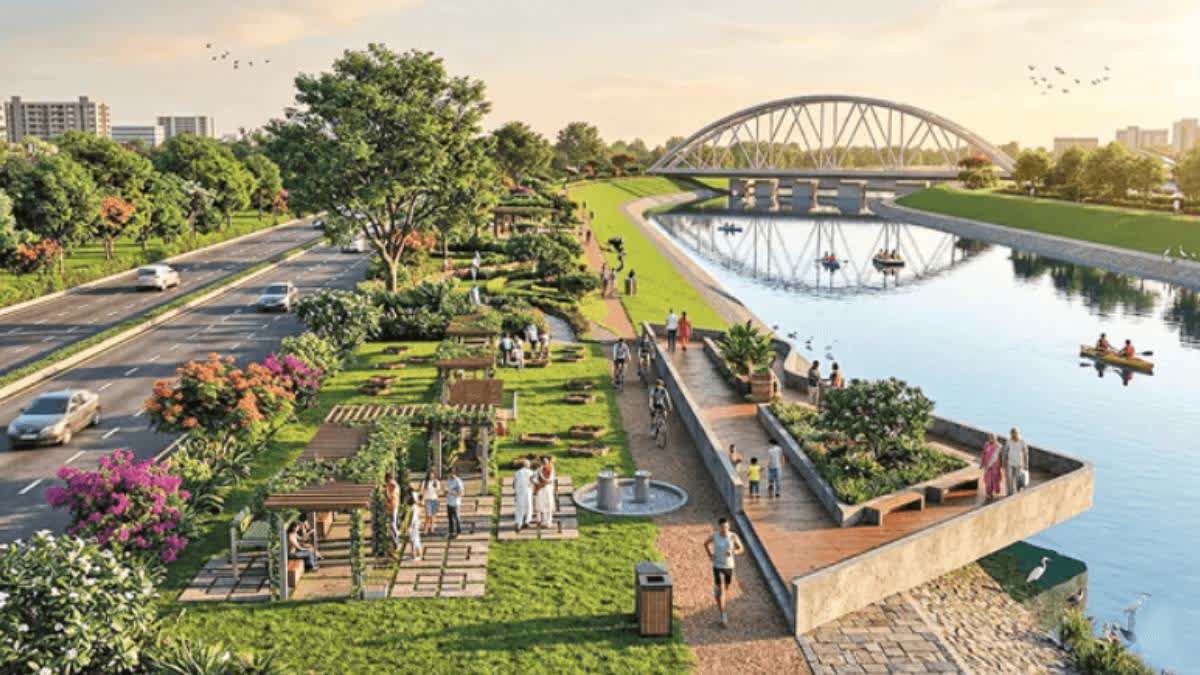
Hyderabad: In a comprehensive vision to transform Hyderabad into a world-class metropolis, Telangana Chief Minister A. Revanth Reddy has unveiled an ambitious roadmap focused on easing traffic congestion, expanding metro connectivity, and rejuvenating the historic Musi River. Addressing queries during the Legislative Council session, the Chief Minister outlined a multi-pronged strategy aimed at improving the quality of life while ensuring sustainable and inclusive urban development.
At the heart of the government’s plan is a massive metro rail expansion project. With a proposed investment of ₹24,000 crore, the second phase aims to extend metro connectivity across 76 kilometers, prioritizing last-mile access to underserved areas like Hayathnagar and Ramachandrapuram. The Chief Minister emphasized that despite Larsen & Toubro stepping away from the metro project, the state government has decided to take control and accelerate development in accordance with central guidelines.
Highlighting the urgency of infrastructure upgrades, Reddy noted that Hyderabad, once ranked second in the country for metro connectivity, has now slipped to ninth due to delays in expansion. New corridors are planned to connect LB Nagar to Hayathnagar, and further extend from Nagole through Owaisi Hospital, Chandrayangutta, Rajendranagar to Shamshabad Airport. Additional plans include linking Falaknuma and Chandrayangutta via revived works at Gowlipura, along with expansions towards the Financial District and Neopolis.
Complementing metro expansion, the government is aggressively pursuing the construction of elevated corridors and underpasses to tackle traffic bottlenecks. A total of 29 such infrastructure projects are underway across the city. Notably, an elevated corridor at Nalgonda Junction is expected to be operational by June-July, significantly easing congestion on that route.
One of the most innovative infrastructure projects includes the construction of an underpass beneath the runway of Begumpet Airport—an unprecedented initiative in India—aimed at improving connectivity towards North Telangana. Additionally, to resolve congestion in cantonment areas affecting routes to Karimnagar and Medchal, the state successfully negotiated with the Defence Ministry to acquire 153 acres of land in exchange for alternative allocations.
The government is also planning a major elevated corridor from Command Control Center Road to Raidurg Knowledge Park, which will connect seamlessly with the PV Expressway, offering a faster route to the airport from key مناطق like Banjara Hills, Jubilee Hills, Madhapur, and Punjagutta.
Addressing pedestrian challenges, the Chief Minister acknowledged that encroachments on footpaths have worsened traffic conditions. Under “Operation ROPE,” authorities are actively removing encroachments to improve walkability and reduce vehicular pressure. Multi-level parking facilities at KBR Park and Nampally have also been developed to address the growing parking crisis.
A broader regional connectivity plan is also in motion, with the development of 360 km-long Regional Ring Roads and radial roads linking them to the Outer Ring Road (ORR). These efforts aim to decentralize traffic and promote balanced urban expansion.
A key highlight of the Chief Minister’s address was the Musi River Rejuvenation Project. He assured that no residents living along the riverbanks would be displaced without proper rehabilitation. “No one will be rendered homeless or suffer losses. The government will provide better housing and facilities,” he stated, emphasizing a humane and inclusive approach.
To oversee the project and incorporate public feedback, a sub-committee of ministers led by Deputy Chief Minister Bhatti Vikramarka Mallu will be constituted. The government is also inviting suggestions from citizens to refine the rejuvenation plans.
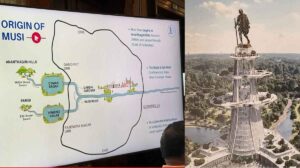
The Musi project includes the development of a 43 km elevated corridor from Himayatsagar to Gowrelli, which is expected to significantly reduce traffic congestion while restoring the ecological balance of the river. Additionally, surplus water from the Godavari River will be utilized to maintain continuous flow in the Musi, further enhancing its revival.
The Chief Minister also outlined the broader “Telangana Vision 2047,” which envisions structured urban growth across a 783 sq. km core urban region within the ORR. Administrative reforms include the creation of Hyderabad, Cyberabad, and Medchal corporations along with four police commissionerates to streamline governance.
Drawing comparisons with major metros like Mumbai, Delhi, Bengaluru, and Chennai, Reddy highlighted their challenges—flooding, pollution, and traffic congestion—and stressed the need to proactively address similar issues in Hyderabad.
He concluded by reaffirming that Hyderabad, once known as the “City of Lakes and Rocks,” can regain its former glory through careful planning and execution. The government’s integrated approach—combining infrastructure expansion, environmental restoration, and citizen-centric policies—aims to position Hyderabad as one of India’s most livable and future-ready cities.