

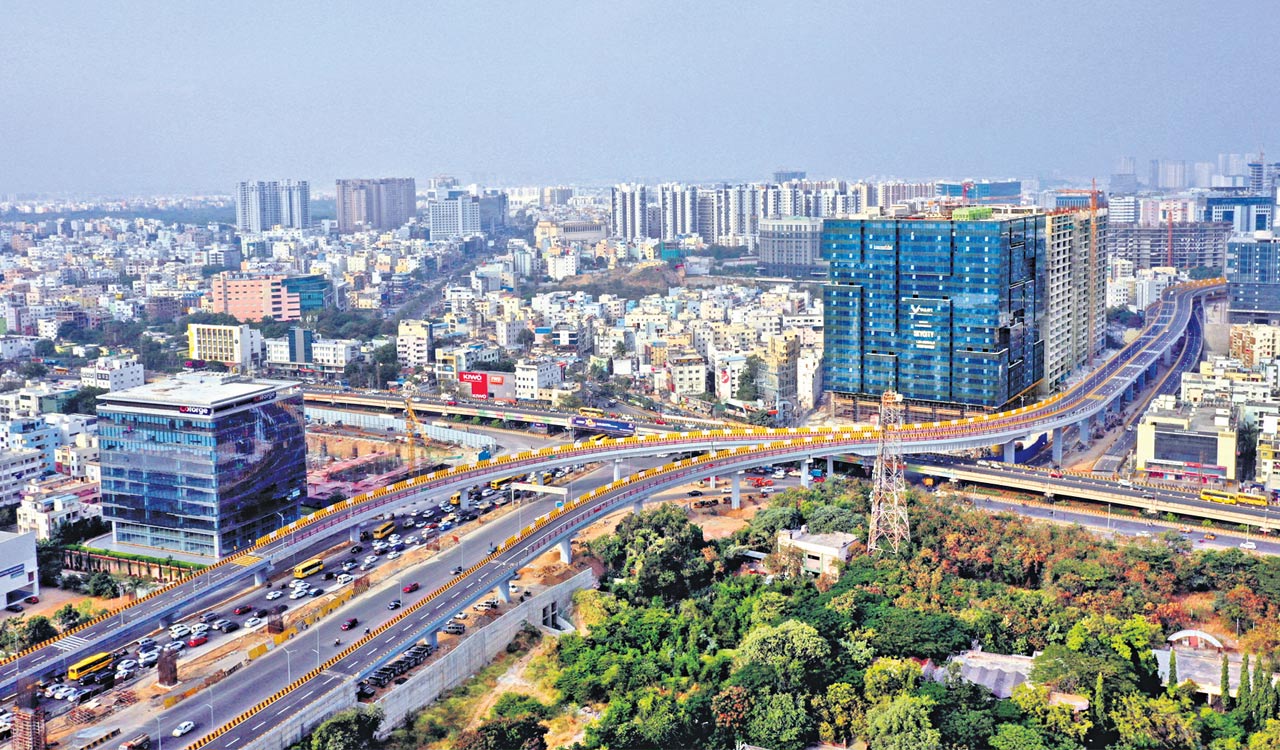
Hyderabad: The rapidly expanding city of Hyderabad is witnessing a major transformation as authorities accelerate traffic management initiatives and fast-track key infrastructure projects aimed at reducing congestion and improving urban mobility. With vehicle numbers surging and commuter pressure increasing across arterial routes, the state government and civic agencies have intensified efforts to upgrade road networks, construct flyovers, and implement smart traffic solutions.
In recent weeks, several parts of the city have experienced traffic diversions and advisories as construction work gains momentum. Key corridors such as Gachibowli, Kondapur, LB Nagar, and Secunderabad have been identified as high-priority zones where congestion has historically been a concern. Traffic police have issued regular alerts to guide commuters through alternative routes, minimizing disruption while ensuring the progress of ongoing works.
According to officials from the Greater Hyderabad Municipal Corporation, multiple Strategic Road Development Programme (SRDP) projects are currently in advanced stages. These include the construction of new flyovers, underpasses, and road-widening initiatives designed to streamline traffic flow across busy intersections. The SRDP has already delivered several grade separators in recent years, significantly reducing travel time in critical stretches.
A senior official noted that “Hyderabad is growing at an unprecedented pace, and infrastructure must keep up with that growth. Our focus is on creating signal-free corridors and improving last-mile connectivity.” This aligns with the broader vision of transforming the city into a future-ready urban hub.
Adding to this, the Hyderabad Traffic Police have stepped up enforcement and introduced real-time monitoring systems. Advanced traffic surveillance cameras, AI-based signal systems, and integrated command centers are being deployed to manage traffic dynamically. These systems help detect bottlenecks, regulate signal timings, and respond quickly to incidents such as accidents or vehicle breakdowns.
Media reports suggest that one of the most impactful developments is the expansion of multi-level flyovers and corridor-based planning. For instance, ongoing works in the IT corridor aim to decongest routes frequently used by tech professionals commuting between offices and residential hubs. Similarly, projects around Uppal and Nagole are expected to improve connectivity to eastern parts of the city.
Urban planners have also emphasized the importance of integrating public transport into traffic solutions. The expansion plans of Hyderabad Metro Rail are expected to complement road infrastructure by offering a reliable alternative to private vehicles. Experts believe that a combination of metro connectivity, improved bus services, and pedestrian-friendly infrastructure will be crucial in addressing long-term congestion challenges.
However, the rapid pace of construction has not been without challenges. Daily commuters have reported delays and confusion due to diversions, especially during peak hours. Social media platforms are filled with updates, complaints, and suggestions from citizens navigating the changing traffic landscape. In response, authorities have increased public communication through digital platforms, FM radio updates, and mobile apps to keep commuters informed.
Another key aspect of the city’s traffic strategy is the focus on sustainable mobility. Officials are exploring dedicated cycling tracks, electric vehicle (EV) infrastructure, and green corridors as part of a long-term plan to reduce carbon emissions and promote eco-friendly transportation.
Experts from urban mobility think tanks highlight that Hyderabad’s approach reflects a broader trend seen in major Indian cities, where infrastructure expansion is combined with smart technology to manage traffic efficiently. “The integration of data-driven traffic management with physical infrastructure upgrades is the way forward,” said a transport analyst.
Looking ahead, the government is expected to announce additional projects in the upcoming budget, further strengthening the city’s infrastructure backbone. With continuous investments and coordinated efforts between civic bodies, traffic police, and urban planners, Hyderabad is positioning itself to tackle congestion challenges while supporting its growth as a major economic and technological center.
For now, commuters are advised to stay updated on traffic advisories and plan their routes accordingly, as the city undergoes this significant phase of transformation.