

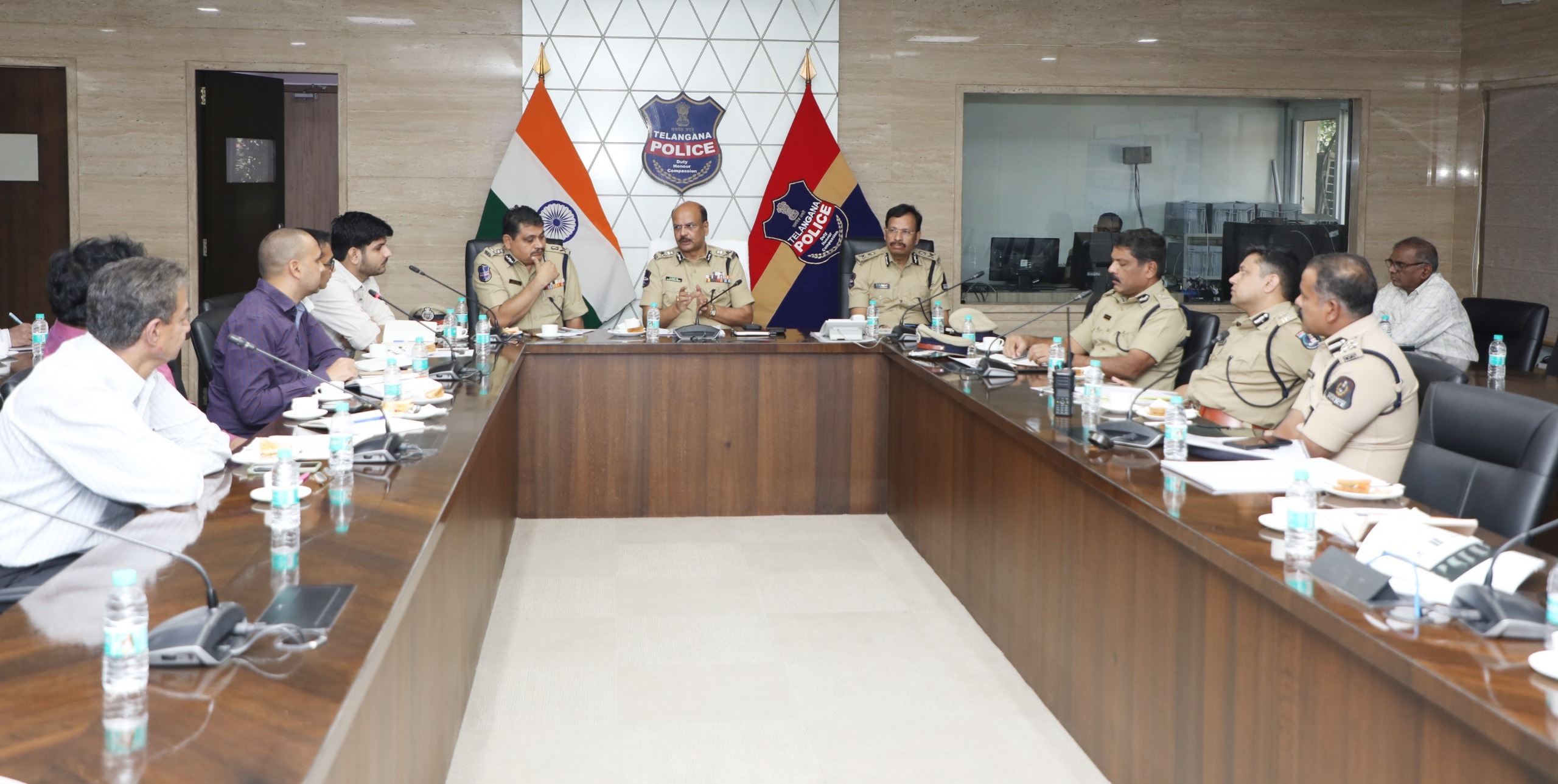
Hyderabad: The Telangana government’s decision to reorganise police jurisdictions in Hyderabad and its rapidly expanding suburbs marks a significant shift towards future-ready urban policing, aimed at reducing response times, improving accountability, and enhancing citizen safety.
By creating a new Future City Police Commissionerate and restructuring existing ones in line with the Greater Hyderabad Municipal Corporation (GHMC) expansion, the government has attempted to align law enforcement with population growth, infrastructure development, and economic transformation.
Why the Rejig Was Necessary
Hyderabad’s urban footprint has expanded far beyond its traditional boundaries. With the merger of 27 municipalities within the Outer Ring Road (ORR) into GHMC and the city’s reorganisation into 12 zones, 60 circles, and 300 wards, the earlier three-commissionerate model had begun to show strain.
Police officials acknowledge that overburdened jurisdictions, overlapping responsibilities, and growing distances between police stations and incident locations often resulted in delayed response, especially in newly developing corridors.
The creation of four commissionerates addresses this challenge by reducing territorial load, allowing police leadership to focus more closely on local issues rather than managing sprawling and diverse regions.
What Changes on the Ground for Citizens
For residents, the restructuring is expected to translate into tangible day-to-day relief.
- Faster Emergency Response:
Smaller jurisdictions mean quicker deployment of patrols and emergency services, particularly in accident-prone highways, industrial zones, and expanding residential layouts. - Improved Law and Order Management:
Critical zones such as the Secretariat, Assembly, international airport, and the upcoming High Court at Budvel now fall under a more focused Hyderabad Commissionerate, strengthening security planning and crowd control. - Better Crime Control in Growth Hubs:
IT corridors like Gachibowli, Madhapur, Financial District, and industrial clusters in Patancheru and Genome Valley—now firmly under Cyberabad—will benefit from specialised cyber, economic offences, and industrial security units. - Focused Policing for Emerging Areas:
The newly created Future City Commissionerate brings areas like Maheshwaram, Shankarpally, Chevella, and Ibrahimpatnam under a single command, ensuring that policing keeps pace with real estate growth, logistics parks, and large infrastructure projects.
Administrative Clarity and Accountability
Renaming the Rachakonda Commissionerate as Malkajgiri and carving out Yadadri Bhuvanagiri district as a separate police unit with an SP improves administrative clarity. Residents of these areas will no longer have to navigate distant commissionerate offices for routine policing needs.
Clear boundaries also mean better accountability—citizens know which commissionerate to approach, and officers can be evaluated on more measurable performance indicators such as response time, crime detection rates, and community engagement.
Supporting Telangana’s Vision 2047
The police reorganisation is closely linked to the state’s long-term roadmap outlined in Telangana Rising – Vision 2047, which aims to transform Telangana into a $3 trillion economy.
As the government pushes for planned development across CURE, PURE, and RARE zones, law enforcement becomes a critical enabler of investment confidence. Predictable policing, faster grievance redressal, and enhanced public safety are essential for attracting global investors, particularly in high-growth corridors like Future City.
A Shift Towards Preventive Policing
Officials indicate that the new structure will allow police to move beyond reactive policing to a preventive and intelligence-led model. With commissioners handling compact areas, greater attention can be paid to traffic management, women’s safety, cybercrime monitoring, and community policing initiatives.
The Road Ahead
While the success of the reorganisation will depend on manpower deployment, infrastructure upgrades, and coordination with civic bodies, the structural overhaul itself lays a strong foundation.
For Hyderabad and its fast-growing outskirts, the message is clear: policing is no longer playing catch-up with urban expansion—it is being planned alongside it.