

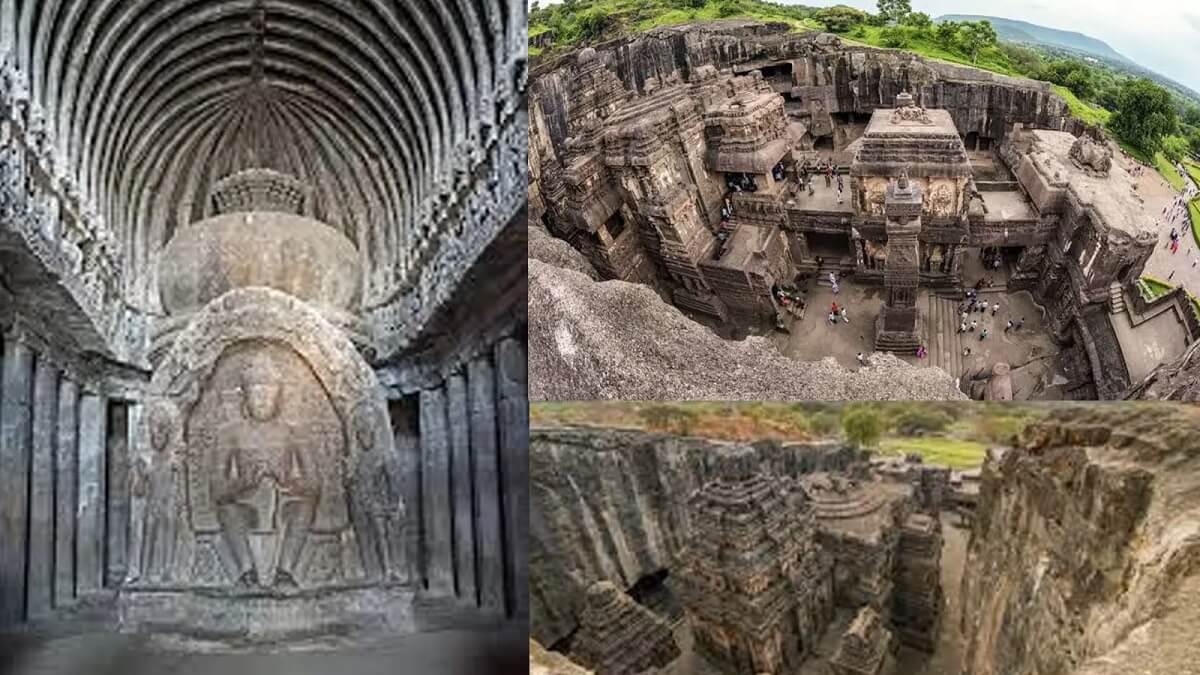
The art or practice of designing and constructing buildings is synonymous with the field of architecture. The exploration of Indian architecture presents a traveller with a variegated bouquet of quintessential destinations that offer a glimpse into the country’s abundant heritage.
The Indian Railway Catering and Tourism Corporation (IRCTC) has proffered a visual treat for sightseers, scholars, and both seasoned and aspiring architects and sculptors—a unique tour covering the caves of Elephanta, Ajanta and Ellora.
Upon arrival in the financial capital of India, Mumbai, travellers are received by IRCTC officials and checked into an upmarket hotel. The following day, guests inhale the ozone-laced breeze of the Arabian Sea during an hour-long ferry ride from the Gateway of India to Elephanta Island in Mumbai Harbour.
The caves are tucked away on a secluded island, commonly referred to as Gharapuri (City of Caves), approximately 10 kilometres east of the Gateway of India. The caves, as well as the island, were christened “Elephanta” by Portuguese colonisers after they became suzerains of present-day Mumbai in 1534. This naming followed the chance discovery of a gigantic rock-cut sculpture of an elephant on the island. In 1661, the East India Company overpowered the Portuguese, bringing the area under British control.
Over time, the caves suffered extensive damage at the hands of Persian invaders, Portuguese soldiers, and later Maratha and British rulers. In 1909, British Indian officials initiated measures to protect the caves from further destruction. Subsequently, in the 1970s, the Government of India undertook restoration work and declared the site a heritage monument.
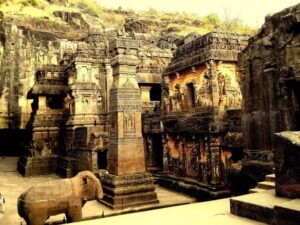
Each cave is carved as a rock-cut temple, featuring a principal massive chamber, courtyards, two lateral chambers and smaller shrines. Cave 1, also known as the Grand Cave, is the largest, extending 39 metres from its entrance to the rear.
After the Elephanta sojourn, tourists usually unwind with a walk along Marine Drive before proceeding to explore the next set of caves near Aurangabad.
Aurangabad lies about 365 kilometres from Mumbai, and IRCTC arranges rail travel to showcase the grandeur of the Ajanta and Ellora caves. The formidable Ajanta Caves find mention in the memoirs of medieval Chinese Buddhist travellers and in records of Mughal Emperor Akbar’s officials in the early 17th century.
Once concealed by dense forest cover, the caves drew widespread Western attention in 1819 after their rediscovery by British officer Captain John Smith during a tiger-hunting expedition. The caves are located in the rocky northern wall of the U-shaped gorge of the Waghur River on the Deccan Plateau. Seasonal waterfalls cascade through the gorge, breaking the silence of the pristine surroundings.
Dating from the 2nd century BCE to the 6th century CE, the paintings and sculptures of Ajanta and Ellora were inspired by Buddhism and its compassionate teachings, representing a pinnacle of artistic excellence in human history.
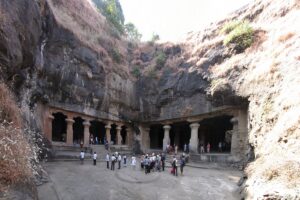
Located about 107 kilometres from Aurangabad, the Ajanta caves are nestled in a panoramic horseshoe-shaped gorge. Despite the ravages of time, the sculptures and murals continue to stand in striking grandeur. Among them are serene depictions of the Buddha in deep meditation.
The Ellora cave temples and monasteries, excavated from a vertical escarpment, lie 26 kilometres north of Aurangabad. Inspired by Buddhism, Jainism and Hinduism, sculptors created elaborate carvings across 34 caves arranged linearly. These include Buddhist chaityas (prayer halls), viharas (monasteries), and Hindu and Jain temples.
Spanning nearly 600 years between the 5th and 11th centuries CE, the earliest excavation at Ellora is Dhumar Lena (Cave 29).
This three-day IRCTC package leaves travellers awestruck by the ingenuity of ancient Indian architects and sculptors, who created enduring marvels of art, devotion and engineering aeons ago.
“If a building becomes architecture, then it is art,” wrote Danish architect Arne Jacobsen, a pioneer of architectural functionalism.

ABOUT THE AUTHOR
Ravi Valluri is Advisor, Krishnapatnam Railway Company Limited. He has authored fiction and non-fiction works and is a faculty member of the Art of Living. His latest book is Sita to Abhaya: Have Things Changed?
He can be reached at valluri.ravi@gmail.com or on WhatsApp at 9618564024.