

Hyderabad, July 3: In a series of far-reaching decisions aimed at strengthening public education, healthcare infrastructure and urban development, the Telangana Cabinet, chaired by Chief Minister A. Revanth Reddy, on Thursday approved the extension of the state-run school meal programme to teachers and non-teaching staff in government educational institutions, sanctioned over 6,200 medical posts for new TIMS hospitals, and gave administrative approval for the first phase of the ambitious Musi Riverfront Development Project.
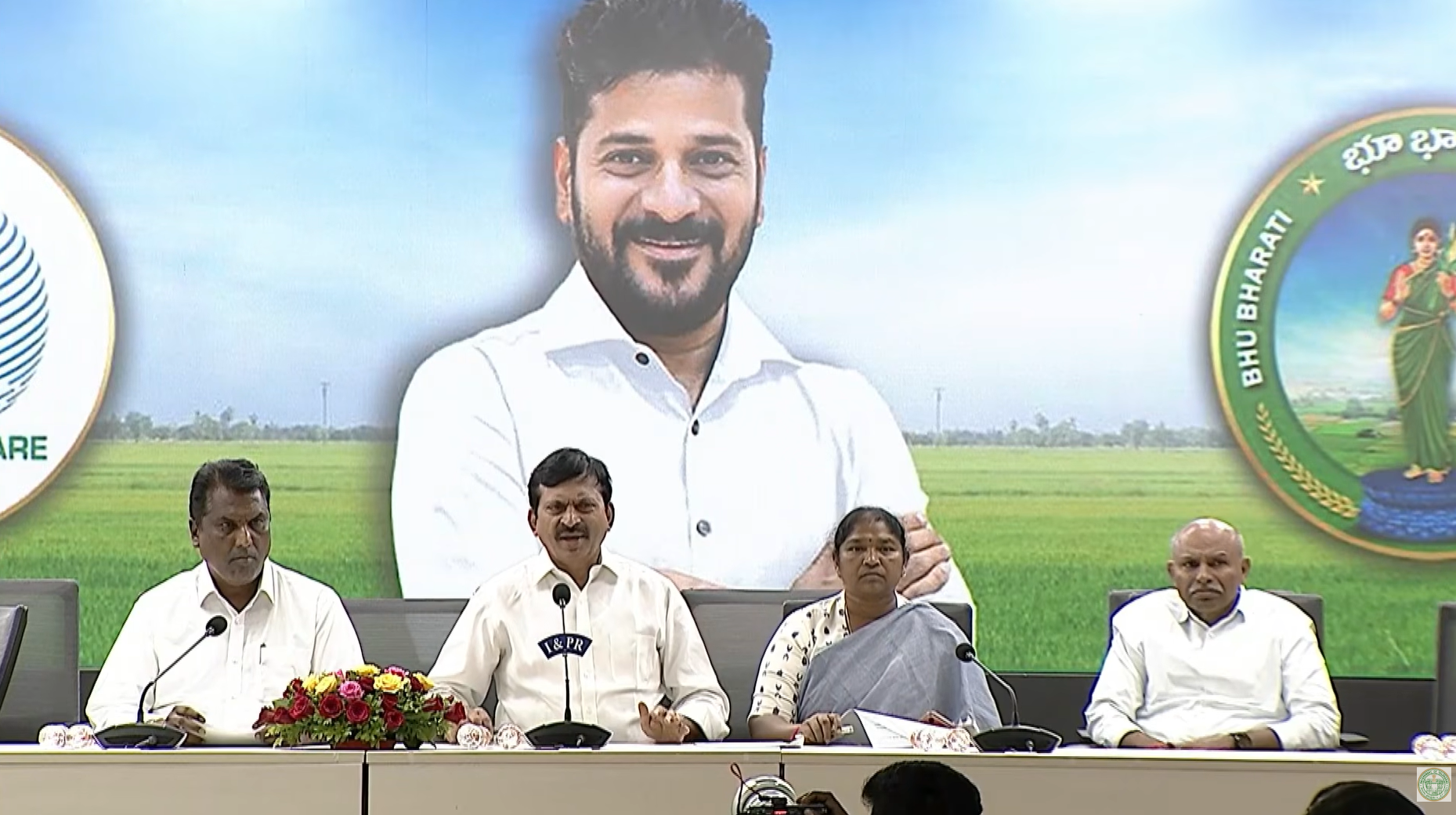
The decisions were announced after a Cabinet meeting held at the Dr. B.R. Ambedkar Telangana State Secretariat. Later, Ministers Ponguleti Srinivasa Reddy, Danasari Anasuya Seethakka, and Adluri Laxman Kumar briefed the media on the key resolutions adopted by the Cabinet.
Breakfast and Lunch Scheme Extended to Teachers and Staff
In a major policy initiative, the Cabinet decided that, along with students studying in government schools and junior colleges, teachers, lecturers and other staff members would also be provided breakfast and lunch under the state’s meal programme.
According to the ministers, the expanded scheme will cover nearly 1.5 lakh teachers, lecturers and supporting staff across Telangana. The move is intended to create a more inclusive educational environment while improving the overall implementation of nutrition programmes in government educational institutions.
The government believes that ensuring the same nutritional support for both students and educators will strengthen participation in the programme and improve the functioning of schools and colleges.
Officials are expected to work out the financial implications and operational framework before the scheme is rolled out across the state.
Cabinet Discusses VBG Ramji Scheme; Supreme Court Move Planned
The Cabinet also held an extensive discussion on the VBG Ramji Scheme, introduced by the Union Government in place of the Mahatma Gandhi National Rural Employment Guarantee Scheme (MGNREGS).
Ministers said that despite objections and differing opinions expressed by several states, the Centre has decided to continue implementing the scheme without incorporating their concerns. In view of this, the Telangana Cabinet resolved that the state should approach the Supreme Court challenging certain aspects of the programme.
The ministers recalled that a Cabinet Sub-Committee headed by Irrigation Minister N. Uttam Kumar Reddy had earlier examined the issue in detail and submitted its report, which formed the basis of Thursday’s discussions.
According to the state government, the Telangana Legislative Assembly had earlier passed a unanimous resolution opposing the VBG Ramji Scheme, arguing that it diluted the rights and welfare of poor rural labourers. However, with the Union Government proceeding with its implementation, the Cabinet observed that the state had little option but to implement the scheme locally to ensure that employment guarantee workers do not suffer any disruption in wage employment.
The government, however, maintained that its legal challenge against the scheme would continue.
Massive Recruitment Drive for New TIMS Hospitals
In another major decision aimed at strengthening public healthcare, the Cabinet approved the creation of 6,278 posts for doctors, nurses and other medical personnel in the state’s upcoming Telangana Institute of Medical Sciences (TIMS) super-speciality hospitals.
The sanctioned posts will cater to the new TIMS hospitals at Sanath Nagar, LB Nagar and Alwal, besides the Super Speciality Hospital in Warangal.
The government has decided to develop these institutions on the lines of the prestigious Nizam’s Institute of Medical Sciences (NIMS), positioning them as advanced tertiary healthcare centres capable of delivering specialised treatment.
The Cabinet also decided that patients receiving treatment at these hospitals would be eligible for financial assistance through the Chief Minister’s Relief Fund (CMRF) by issuing Letters of Credit (LOCs), thereby reducing the financial burden on economically weaker sections.
The recruitment process is expected to begin shortly after the necessary administrative procedures are completed.
₹7,345 Crore Cleared for Musi Riverfront Development Phase-I
Giving a major push to Hyderabad’s urban transformation plans, the Cabinet granted administrative approval for the Phase-I development of the Musi Riverfront Project.
The first phase will cover nearly 21 kilometres up to Gandhi Sarovar, with an estimated project cost of ₹7,345 crore.
Ministers said the tendering process would begin soon, paving the way for one of Telangana’s largest urban rejuvenation initiatives.
The project aims to restore and redevelop the Musi riverfront through environmental conservation, flood management, modern public infrastructure, improved connectivity, landscaped public spaces and enhanced civic amenities. The government expects the redevelopment to significantly improve Hyderabad’s urban landscape while addressing long-standing environmental concerns associated with the Musi River.
Focus on Welfare, Infrastructure and Institutional Strengthening
The Cabinet’s latest decisions underline the Telangana government’s emphasis on expanding welfare measures while simultaneously investing in long-term institutional capacity.
The extension of the meal programme reflects the government’s focus on strengthening public education, while the approval of thousands of healthcare posts is expected to significantly improve access to specialised medical services across the state. Similarly, the Musi Riverfront project represents one of the largest infrastructure initiatives currently planned for Hyderabad.
Political observers note that the Cabinet’s decisions come at a time when the state government is accelerating implementation of several flagship welfare and infrastructure programmes while also positioning itself on issues concerning Centre-State relations, particularly over changes to rural employment programmes.
With these approvals, the Telangana government has signalled its intent to combine social welfare initiatives with large-scale investments in healthcare, education and urban development, setting the stage for multiple high-impact projects over the coming months.