

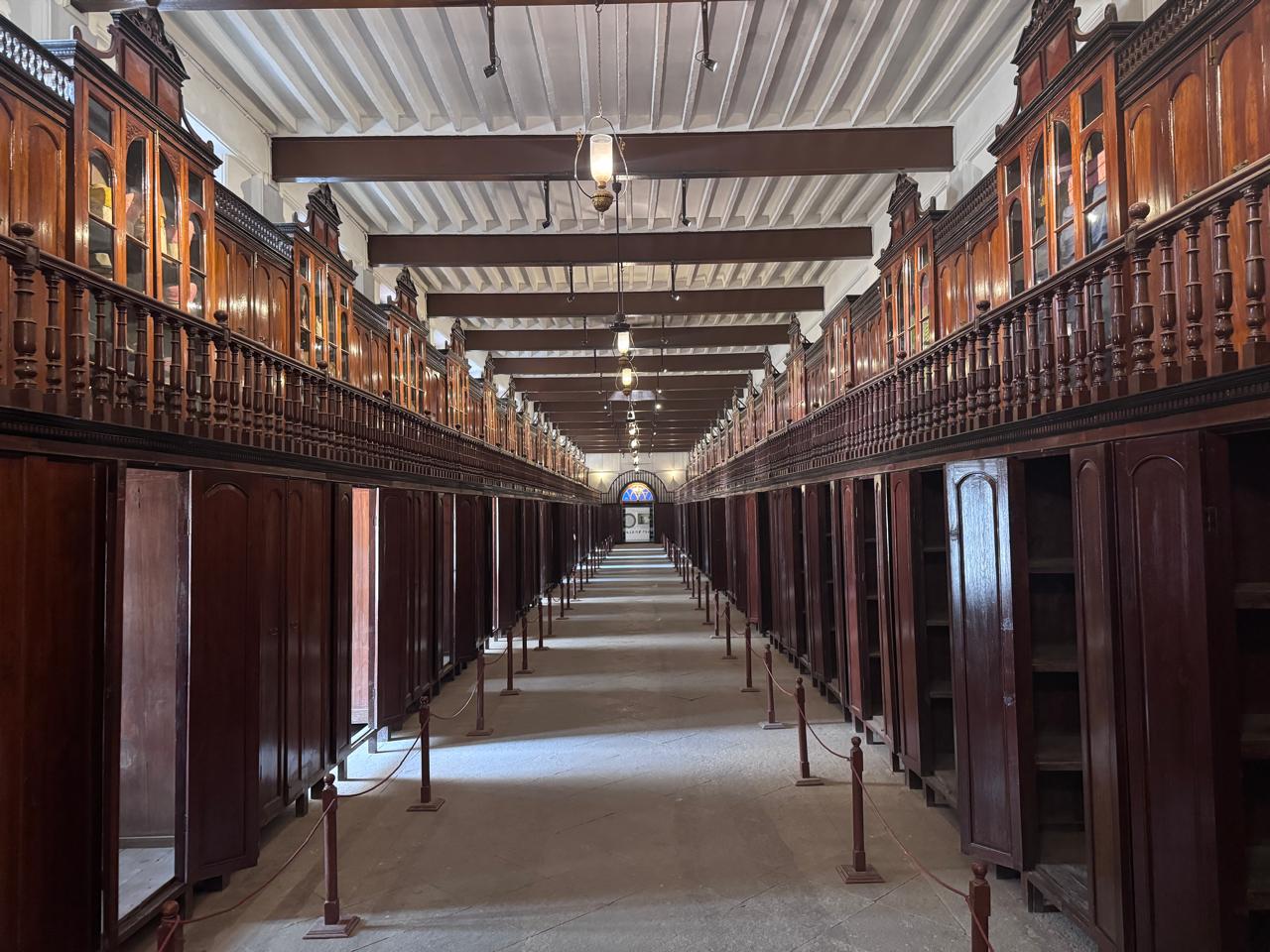
Hyderabad, a city celebrated for its regal past, magnificent palaces, and enduring cultural legacy, is home to one of India’s most fascinating yet lesser-known historical treasures—a spectacular 176-foot-long walk-in wardrobe that was once regarded as the world’s longest of its kind. Preserved at the Nizam’s Museum, this remarkable architectural and historical marvel belonged to H.E.H. Nawab Mir Mahboob Ali Khan, the Sixth Nizam of Hyderabad, whose reign left an indelible mark on the city’s history.
Constructed from premium Burma teak, the wardrobe stands as a testament to the extraordinary craftsmanship and refined tastes of the late 19th and early 20th centuries. Stretching an impressive 176 feet and designed across two levels, it is far more than a storage space for royal attire. It represents an era when Hyderabad was among the wealthiest princely states in the world and its rulers patronized the finest artisans, architects, and craftsmen.
The wardrobe reflects the grandeur of the Asaf Jahi dynasty, which ruled Hyderabad for over two centuries. Every section of this massive structure was meticulously designed to accommodate the elaborate ceremonial robes, sherwanis, turbans, footwear, hunting attire, military uniforms, and seasonal garments of the Sixth Nizam. The use of Burma teak—renowned for its durability, strength, and elegant finish—ensured that the wardrobe would withstand the test of time while exuding sophistication befitting a royal residence.
One of the most striking aspects of the wardrobe is its intelligent design. Built across two levels with interconnected storage spaces, it allowed for the systematic organization of an extensive royal collection. At a time when modern wardrobes and storage systems did not exist, such an elaborate arrangement reflected not only luxury but also remarkable planning and functionality. The sheer scale of the structure illustrates the importance attached to royal attire in the princely courts of India, where clothing was a powerful symbol of authority, status, and tradition.
Today, visitors to the Nizam’s Museum can witness this extraordinary piece of royal heritage while also exploring an impressive collection of costumes worn in Hyderabad during the early 19th century. These garments offer a rare glimpse into the evolution of fashion, textiles, and courtly etiquette during one of the most vibrant periods in the city’s history.
The displayed costumes showcase intricate embroidery, fine handwoven fabrics, elaborate zari work, and distinctive tailoring techniques that reflect Hyderabad’s rich cultural influences. Persian aesthetics blended seamlessly with indigenous Deccani traditions, creating a unique style that became synonymous with the royal court. Every garment narrates a story of ceremonial grandeur, artistic excellence, and meticulous craftsmanship.
Mir Mahboob Ali Khan, who ruled Hyderabad from 1869 to 1911, was known not only for his royal lifestyle but also for his philanthropy, administrative reforms, and concern for public welfare. His reign witnessed significant developments in infrastructure, education, healthcare, and urban planning. The wardrobe, therefore, serves not merely as a personal possession of a monarch but as a cultural artifact representing an era of prosperity, artistic patronage, and refined living.
The Nizam’s Museum itself remains one of Hyderabad’s most treasured heritage destinations. Housing priceless artifacts associated with the Asaf Jahi rulers, the museum preserves an extraordinary collection of gifts, ceremonial objects, royal memorabilia, manuscripts, furniture, and personal belongings that collectively narrate the story of one of India’s most influential princely states. The wardrobe stands among its most iconic exhibits, drawing historians, architecture enthusiasts, and tourists eager to witness a unique chapter of royal history.
In an age dominated by contemporary fashion and modern interiors, the wardrobe offers an intriguing reminder that luxury in the royal courts extended far beyond jewels and palaces. It celebrated craftsmanship, precision, and artistic excellence in even the most functional spaces. The structure exemplifies how architecture and furniture were designed not merely for utility but as enduring works of art.
As Hyderabad continues to evolve into a global metropolis known for technology, innovation, and commerce, landmarks such as the Sixth Nizam’s walk-in wardrobe serve as enduring reminders of the city’s illustrious past. They bridge generations, allowing visitors to experience the grandeur of a bygone era while appreciating the extraordinary skills of artisans whose creations have survived for well over a century.
The 176-foot-long walk-in wardrobe is more than a royal curiosity—it is a symbol of Hyderabad’s rich heritage, architectural ingenuity, and timeless elegance. Preserved with care at the Nizam’s Museum, it continues to captivate visitors from across the world, offering an unforgettable glimpse into the opulent lifestyle of the Nizams and the remarkable cultural legacy they left behind.