

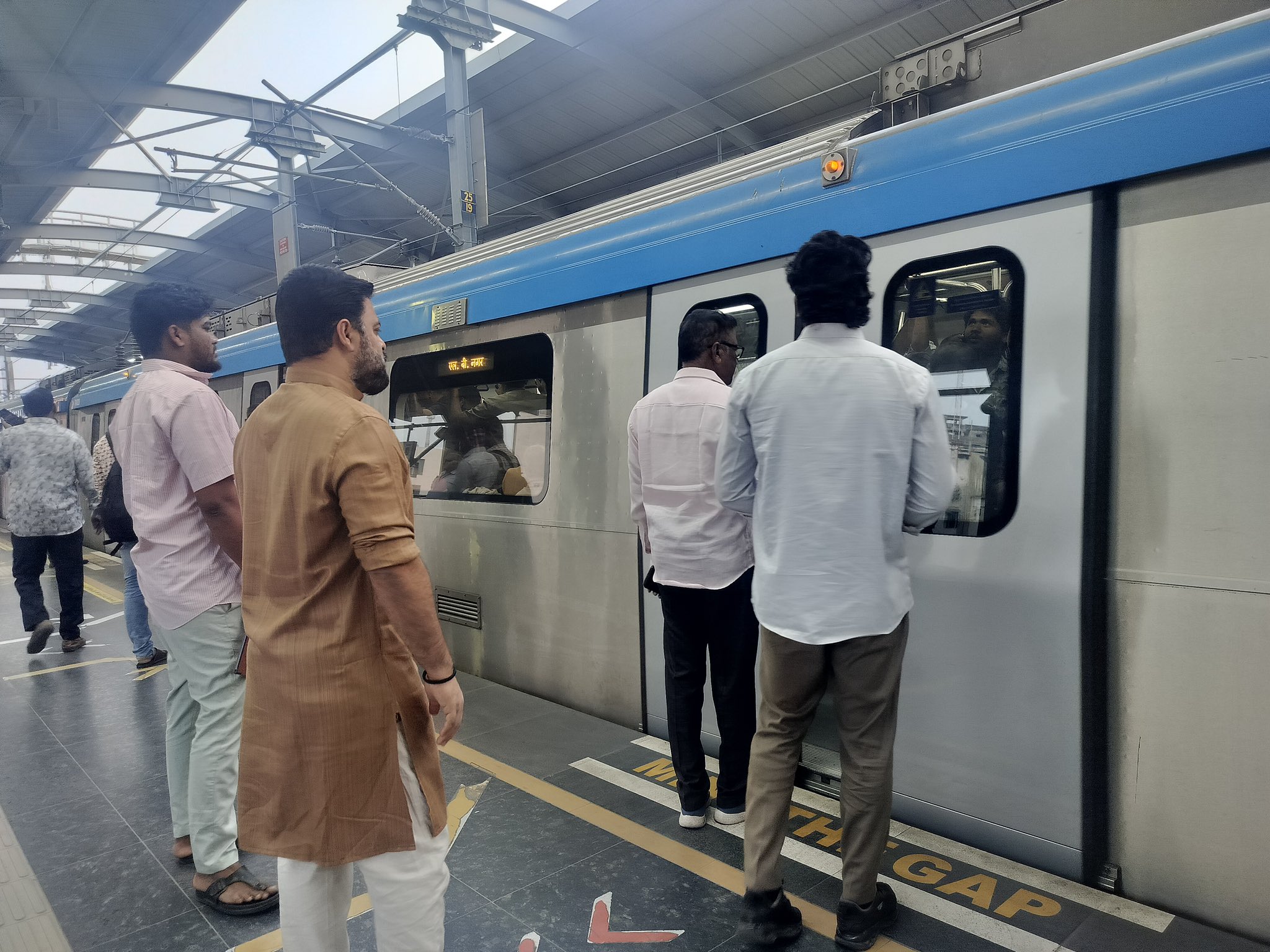
Hyderabad: The Telangana government is in the final stages of taking over the operations and ownership of the Hyderabad Metro Rail, marking a decisive shift in the management of one of India’s largest urban transit systems. Senior officials have confirmed that the process is progressing as planned and is expected to be completed by March 31, aligning with the end of the current financial year.
The move is being closely watched as it represents one of the most significant restructurings of a public transport project originally developed under a public-private partnership model. The Hyderabad Metro Rail was launched as a flagship infrastructure initiative with private participation, but mounting financial pressures and long-term sustainability concerns have prompted the state to step in and assume full control.
Strategic Shift in Urban Transport Governance
The takeover reflects the Telangana government’s broader strategy to strengthen public transport, ensure operational stability, and integrate metro services more closely with the state’s urban development plans. Officials involved in the process say the objective is not merely administrative control, but long-term reform of Hyderabad’s mass transit ecosystem.
Under the original structure, the metro project was executed by Hyderabad Metro Rail Limited in partnership with Larsen & Toubro, which held a majority stake and was responsible for construction and operations. While the model was initially hailed as innovative, the project faced challenges such as slower-than-expected ridership growth, revenue shortfalls, and rising operational costs, particularly during and after the pandemic years.
Over time, these pressures led to prolonged discussions between the private operator and the state government, culminating in the decision for the Telangana government to take over the project in full.
Financial and Legal Framework
As part of the takeover, the state is finalising a comprehensive financial settlement that includes the absorption of metro-related debt and the acquisition of the private partner’s equity stake. Government sources indicate that the total financial package is substantial, reflecting the scale and complexity of the project.
Officials stress that the settlement has been structured to ensure continuity of services while avoiding disruptions to daily commuters. Legal and financial due diligence has been underway for several months, with multiple departments coordinating to ensure compliance with contractual obligations and statutory requirements.
The proposal is expected to receive formal approval from the state cabinet shortly, after which the remaining procedural steps will be expedited to meet the March 31 deadline.
Ensuring Seamless Operations
One of the government’s primary concerns has been maintaining uninterrupted metro services during the transition. Authorities have assured that train operations, staffing, maintenance schedules, and safety protocols will continue without change during the takeover period.
Once the transition is complete, the metro will function entirely under government ownership, allowing for quicker decision-making and closer coordination with other transport agencies such as city bus services, traffic management authorities, and urban planning bodies.
Transport experts believe that unified control could improve last-mile connectivity, fare rationalisation, and service frequency, particularly during peak hours.
Unlocking Future Expansion Plans
A key motivation behind the takeover is to unlock long-pending expansion plans for the Hyderabad Metro. Proposed Phase-2 and Phase-2B corridors, which aim to significantly extend the network into emerging residential and commercial zones, have been awaiting clarity on Phase-1 ownership.
With the state assuming full control, officials expect smoother coordination with the central government for approvals and funding support. The expansions are seen as critical to reducing traffic congestion, cutting carbon emissions, and supporting Hyderabad’s rapid urban and economic growth.
Planners have also indicated that future metro corridors will be aligned with major employment hubs, IT parks, and new urban developments, including airport-linked routes and suburban growth corridors.
Public Response and Expert Opinions
Public response to the takeover announcement has been largely positive, particularly among daily commuters who hope that government control will lead to improved affordability and service reliability. Urban policy analysts, however, caution that ownership change alone is not a cure-all.
They point out that long-term financial sustainability will depend on increasing ridership, boosting non-fare revenue through commercial development, and integrating the metro with feeder services such as buses, cycling infrastructure, and pedestrian pathways.
Experts also emphasize the importance of professional management practices, even under government ownership, to ensure efficiency and customer-centric operations.
A Defining Moment for Hyderabad’s Transit Future
The Hyderabad Metro takeover marks a defining moment in the evolution of urban transport governance in Telangana. It underscores the state government’s willingness to intervene decisively in large infrastructure projects to protect public interest and long-term viability.
As the March 31 deadline approaches, all eyes are on how swiftly and smoothly the transition is executed. If successful, the takeover could set a precedent for other cities grappling with similar challenges in public-private infrastructure projects.
For Hyderabad, the move represents more than a change in ownership — it signals a renewed commitment to building a robust, inclusive, and future-ready public transport system that keeps pace with the city’s ambitions.